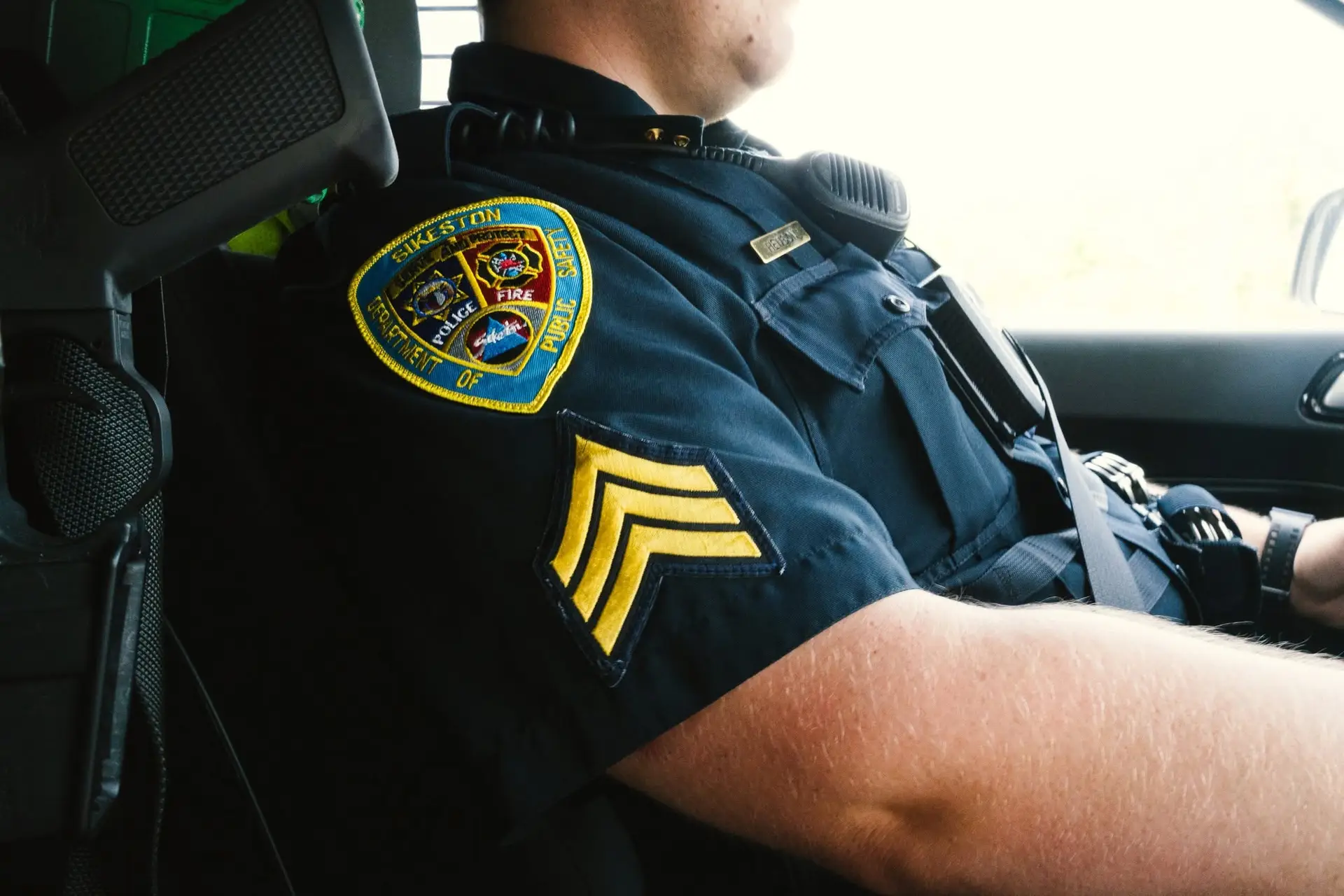
August 3, I went on my first ride-along with Sikeston Police. I wanted to highlight an individual officer’s experience on the job and learn more about what its like being an officer.
Sergeant Tanner Henson is a Sikeston native and comes from a long line of service. His dad, grandpa and two uncles were in the Marine Corps. His brother is in the Army National Guard and also serves as a police officer. Henson says he looked up to his dad and his brother growing up, seeing them as good role models. “They’re serving the community, trying to make it better in their own ways. It felt necessary for me to do my part too.”

Henson says his favorite part of being an officer is engaging with the community, especially when he can have a positive influence on youth. “I have a little drawbag in the back with stickers. If I’m driving and see a kid I’ll ask if they want one, most kids are usually pretty happy.” He also enjoys the investigation side of police work.
“It’s always tough when people have some type of calamity. Whether it be their house burns down or a crime was committed against them, I like trying to help them in any way I can.”
I asked Sergeant Henson about the main needs he sees in our community. “Homelessness and mental health. They usually go hand in hand. A lot of calls involve a homeless person sleeping in the park or sleeping in front of someone’s business.” He also noted seeing lots of loneliness. “You come across a lot of people who feel very alone and just need somebody to talk to. Every once and awhile an older gentleman calls, and his wife recently died. He said himself that he doesn’t feel like he has anybody to talk to. It seems like he talks to himself sometimes.”
We also talked about how bridging divides between groups of people is difficult nowadays. “Hashing out wounds is usually the hardest part. You also have to get people willing to come together and talk about solutions. You can’t have two groups that have two separate problems — or a problem with each other — who aren’t willing to come to a conclusion that’s good for everybody.”
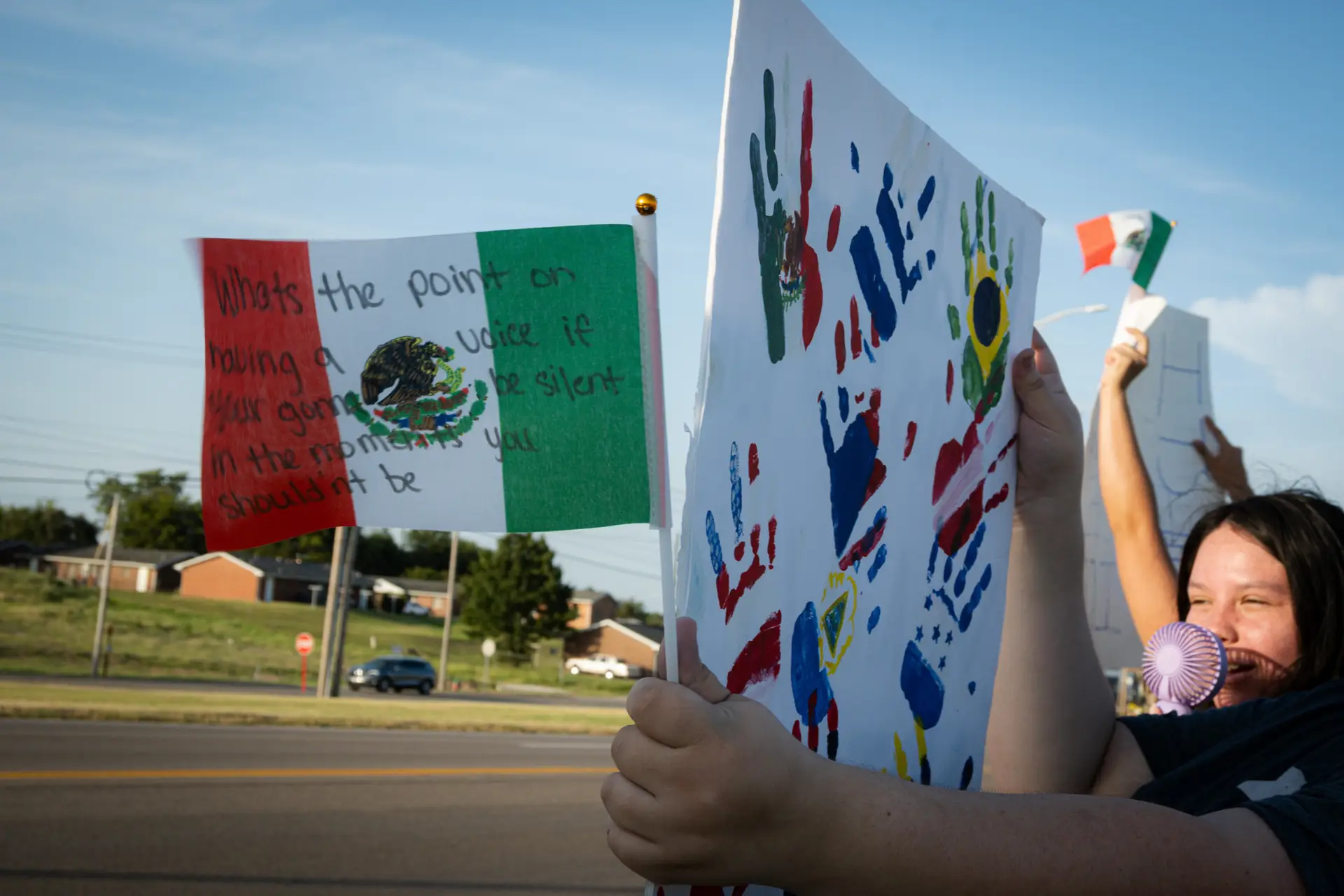
Summer in Sikeston this year has been marked by tensions with the police and law enforcement at large. On June 10th, Lloyd Gilmore, a black man, died in-police custody. This sparked protests, criticism, and serious questions that still are not fully answered. The Missouri State Highway Patrol should nearly be done investigating the incident on June 10th, but folks and local police are still waiting. The Sikeston Jaycee Bootheel Rodeo in August is usually a time when folks come together despite their beliefs. Yet, this year, it caused a rift. ICE officers were at the rodeo and arrested a well-known Sikeston man named Ricardo Montes. Another protest is now planned for this Sunday in Sikeston regarding ICE operations and police brutality.
I wanted to know how these things impact Sergeant Henson and how he deals with it. “It sucks when people judge you just because you wear a badge and a uniform. It sucks to be judged before somebody even takes the time to have a conversation with you, to get to know you as a person and as an officer.” He has a good way of dealing with it, though. Spending time with his wife, children, and pets helps him think clearly. “I have two cats, a dog, and a like, a hundred chickens. I also have four cows. So I keep pretty busy.”
Like any other job, there’s a learning curve, but the stakes of a mistake are much higher. He says there are times where he believed he could have done better, but he doesn’t let his mistakes affect his sense of self. “Do better as you move forward. If you dwell on the past, you’re never going to fully see and comprehend the future that’s at hand. Know your history and learn from it. Do better from it.”
This is how he goes about guiding new officers. Once officers are hired out of the police academy, they undergo a 12-week field training period. If that period is complete but an officer is not fully ready, field training officers can and will decide to extend it. Those decisions are often based on how well an officer handles high stress situations, or if they’ve encountered enough of those situations to go on their own.
Those high stress situations, alongside public criticism, are reasons why many choose to leave law enforcement. When you love your community but feel detached from it because of a badge, you might choose reconnection instead. But this combination also seems to cause another dynamic.
There’s a common theme you can see throughout history to the modern day. When a group experiences a combination of constant trauma and constant criticism, the group may double down on its shared identity.
Moving forward, I’d like to learn more about the mutual identity of law enforcement. I want to understand its function — how it hurts and/or helps the efficiency of policing. “Back the Blue” exists for a reason. Officers are traumatized daily by the problems of the people. Meanwhile, people are traumatized by officers, too. When we all have this trauma from one another and we double down on our opposing groups — we might become more interested in protecting our group than we do addressing the root of our issue.
It’s hard to pluck out a root that grew you. How can you do that without plucking out, well, you? We have grown from our past, but the memory of it remains, and we are living proof of that memory. As representatives of authority and members of our community at large, officers cannot detach themselves from this history. They become reflections and representatives of it the moment they put on that badge. Officers may come in with hopeful aspirations to change things — but no matter how deeply they wish to be the change — other changes are working against them at the same time.
It’s nearly impossible to serve a fractured plate. You might even drop it, causing more glass to break. When the average person only speaks for their group — red, white, black, or blue — we find ourselves bruised and abused, divided by colors that used to unite, but now only seem to divide.