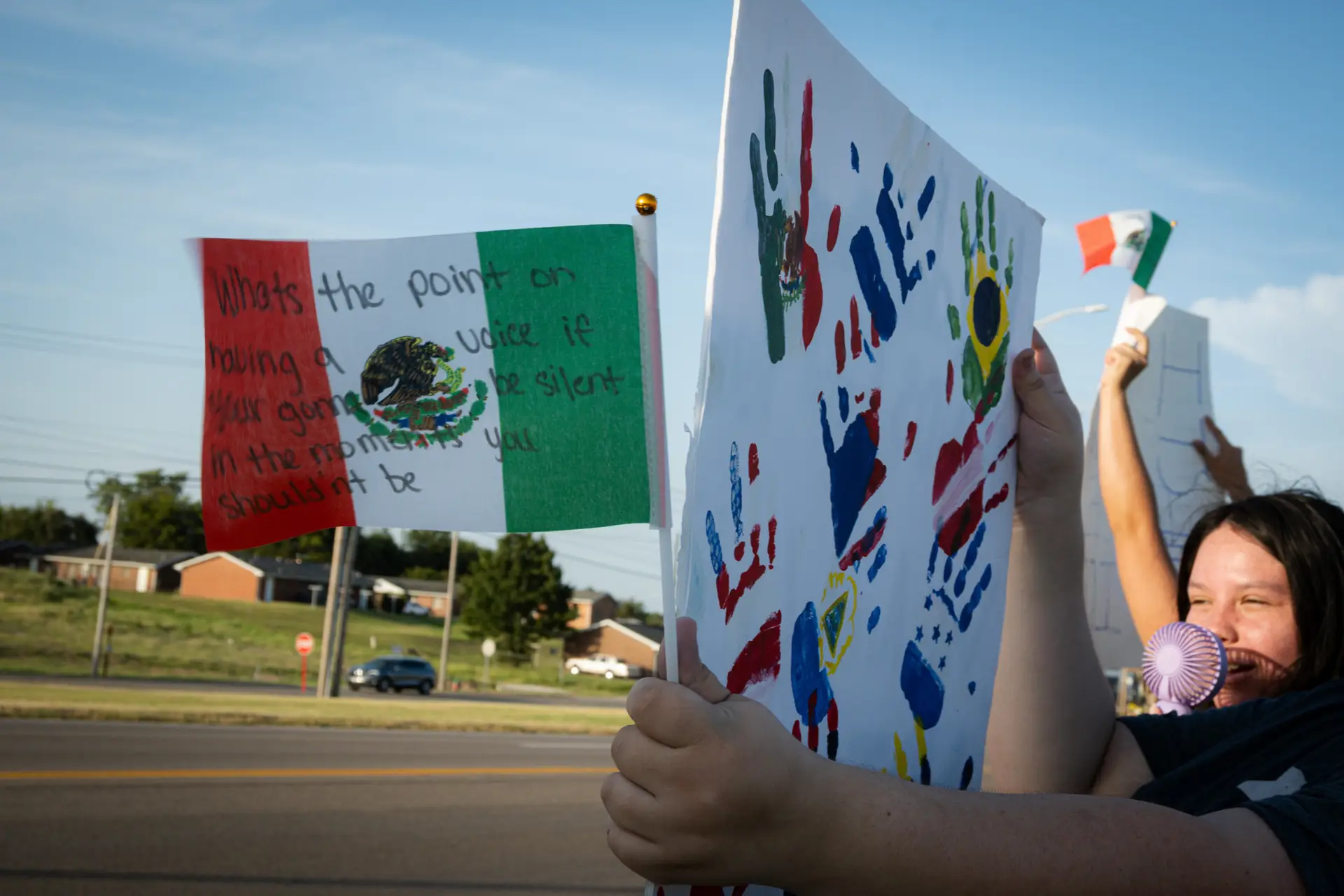

Saturday, June 13, in Sikeston began with gathering, and conversation — for a unified cause. The death of Lloyd Gilmore on June 10th, in Sikeston, Missouri relit a fire many prayed would never light again — tensions between the black community and the police force.
Lloyd Gilmore died in the hands of police custody during a confrontation. Witnesses say they saw a group of officers beat up a handcuffed black man, who tried to flee. Sikeston has a deep history of racial tensions, police brutality, and a history of protest against those issues, too. In recent years, there’s been talk of efforts to heal these histories and build bridges, but now, folks feel less hopeful; they wonder how this could happen, if efforts to change are truly being made.

The gathering at Lincoln Park was organized by the local NAACP Chapter 4077. President Mark Wiggins began the event off, and explained what to expect.
The gathering gave individuals the opportunity to address their community face-to-face. Folks sat in the bleachers surrounding the basketball court, kids played in the parks, and a speaker would take their turn in the middle of the court with a microphone. As the event drew on longer and took on its own personality, the microphone started being brought to certain people.


This provided something we seem to see less often these days, in-person political participation and connection. It was a communal event driven by individual expression. The purpose of the gathering was seeking justice for Lloyd Gilmore, and to ensure his civil rights are met. Yet, the conversations and expressions went beyond the simple topic of police brutality — it went into other related subjects, histories, and potential solutions.
From the beginning — speakers noted a distinction, a difference, within the black community. In many ways, this distinction comes down to age, and perspectives on how to address the issue at hand. I could not catch everyone’s name that I am quoting, so if you recognize yourself, please comment on the photo and let me know so I may properly credit your words to you. All photos are in chronological order
The second speaker said, “We’re older, we want to keep it peaceful. But we have to understand, there is a younger generation under us, and there is going to be a boiling point. I’m not trying to make there be one, but there is going to be a boiling point because they’re gonna get tired.”

After she spoke, an Army veteran came up to speak, and addressed the local NAACP President. “Mark, you remember, your dad led the NAACP when you were growing up… to give equality a try. But we did it without violence.”
After the veteran spoke, Mr. Wiggins said, “No matter what the findings are, we have to respond to those findings, and then there’s gonna be tomorrow after that, because it’s not gonna stop just because you stopped and went back to your normal.”

Then, Hillary Harris came up to speak. “His murder was not the first, and if we don’t do something, it will not be the last. For the people who are here, I want us to think twice, because, our people are already in a sense trying to divide us between peaceful protesting and raising hell… So let’s stay focused on the mission, for how we feel to move forward.”
She also suggested organizing a march or a walk for Juneteenth, to show the town that they are not backing down, and will not let this cause die.
Then, Hillary Harris came up to speak. “His murder was not the first, and if we don’t do something, it will not be the last. For the people who are here, I want us to think twice, because, our people are already in a sense trying to divide us between peaceful protesting and raising hell… So let’s stay focused on the mission, for how we feel to move forward.”
She also suggested organizing a march or a walk for Juneteenth, to show the town that they are not backing down, and will not let this cause die.

After she spoke, a man who grew up in Chicago and then moved to Charleston spoke. He complimented the NAACP President on the manner in which he organized his protests, and the attitudes he encouraged. “Even though a brother came in with a bullhorn, saying F the police, but the crowd that was there with what he was doing, they boarded that out.” Later on as he was still speaking, he said, “I saw white and black blowing horns, white and black out here. It’s not a black and a white thing, it’s a human being thing, it’s a God thing.” This statement was followed by applause. This man also criticized a local news station, saying that during a protest on Main and Malone a couple days ago, “the guy was too scared to come across the street… some of us stopped the traffic and told him, it’s safe for you to come over. He was listening to the other brother screaming F the police, that ain’t what we over here for.”

Eventually, Bishop Nathaniel Green with New Life, New Beginnings Church walked up to speak. “We’ve been doing this for, since I was 14 years old. I joined the NAACP at fourteen. We’ve been marching, and protesting against these kinds of atrocities that are going on right now. In four more years, I’ll be 80 years old.” “We have got to come together. You can’t write, cussing, that won’t get nothing done. You gotta follow a strategic plan.”
Later on, as more people arrived, there were other younger folks who chose to speak. I’d say this is when we begin to see a nuanced, and passionate, discourse over how to address what happened, and how to seek justice for Lloyd.

Dantrail Tipler spoke. “You guys said you have been marching and protesting for awhile now, that came out of the elders’ mouth. We’ve been doing it for awhile too, and we’re younger… we’re tired of marching and protesting to no avail. Our feet hurt. I don’t even wanna stand up, because my feet hurt from marching and protesting… talking about the police department, wanting them to do what’s right, it ain’t been working. I’m not saying that what you gave have did was for nothing, that’s not what I’m saying, but it’s not enough right now, because they’re still doing what they were doing then. We need to put a stop to it, like — STOP — red light… if they’re out there killing us, they should be afraid to come to work. You mean to tell me how 6 7 white officers can kill an unarmed black man and come back to work the next day? If one of us shot a police officer, as we can see what just happened in Caruthersville, you can’t walk the streets the next day. Every officer on the force is gonna be looking for you — IN FORCE — so why ain’t we doing the same thing?”

Then, the woman beside him began speaking.
“The other day you said, we can’t be angry… but our anger is what pushed it out on social media and is the reason why his story got a reach now. There’s different outlets picking up his story because we took our anger and put it on social media… like he said, yeah, marching and whatever, we can do that, it’s bringing some attention, but it’s not bringing the attention and the action that we are needing.”
She said this to Mark Wiggins, the NAACP Chapter 4077 President. When he got the mic back, he clarified himself, saying he does not remember saying that people should not be angry, and does not believe he has the right to tell others how to feel. This might be in reference to comments made about *how* people online expressed their anger.
On the topic of anger getting attention, this woman is correct. As a journalist, I look for stories that invoke deep human emotion. My upmost goal is to provide a platform where people can say their truth — then have it shared, pondered, questioned, and ultimately, have it impact our collective mindset. The emotions people experience and express are a truth in and of themselves, an important one. The story of Lloyd Gilmore comes down to far more than the facts of what happened, it also comes down to the way his death is affecting his community and the emotions people feel.
This woman was also the cousin of Denzel Taylor, who died in 2020. She expressed a particular frustration, that the officers responsible for the death of her cousin are still on the police force.
Body camera footage of the interaction with Lloyd on June 10th is not yet released. Many of the facts are currently under investigation by the Missouri State Highway Patrol, and under the Missouri Sunshine Law (Subsection 2[2]), body camera footage cannot be released during an active investigation.
Right now, those pieces of evidence are not public. However, the evidence in a relatively large recent case is public. The case of Denzel Taylor.
The documentary “Silence in Sikeston” explains what happened to Denzel, and shows body camera footage. It explains that on April 29th, 2020 — Denzel Taylor was experiencing some personal problems, and went to his father for advice. His father claims he had been drinking, and did not speak with his son the same way he would have if he were sober, leading to a heated argument. Denzel Taylor made a call to his fiance, asking her to pick him up, because his father had told him to leave the house. The father claims, as he closed the door behind his son, Denzel Taylor pulled a gun out.
Denzel Taylor left, but then made his way back toward the house on foot. When officers approached, he was standing in the road.
Officer 1: “Show me your hands, now!”
Officer 2: “Take your hand out of your pocket!”
Denzel Taylor: “Just kill me, bro.”
Officer: “Now! Hands out of your pocket-”
**Officer lets off two shots**
Officer: unintelligible comment
****Officer lets off a shot**
**rest of shots are fired**
Total — 19 shots fired.
When they approached him to give emergency care, one said “what’s in his pocket?”
It was a stick.
Denzel Taylor did raise his hand, but it appears he put the hand back down. A second and a half, if that, elapsed from the time he put his hand back down, and when officers opened fire.
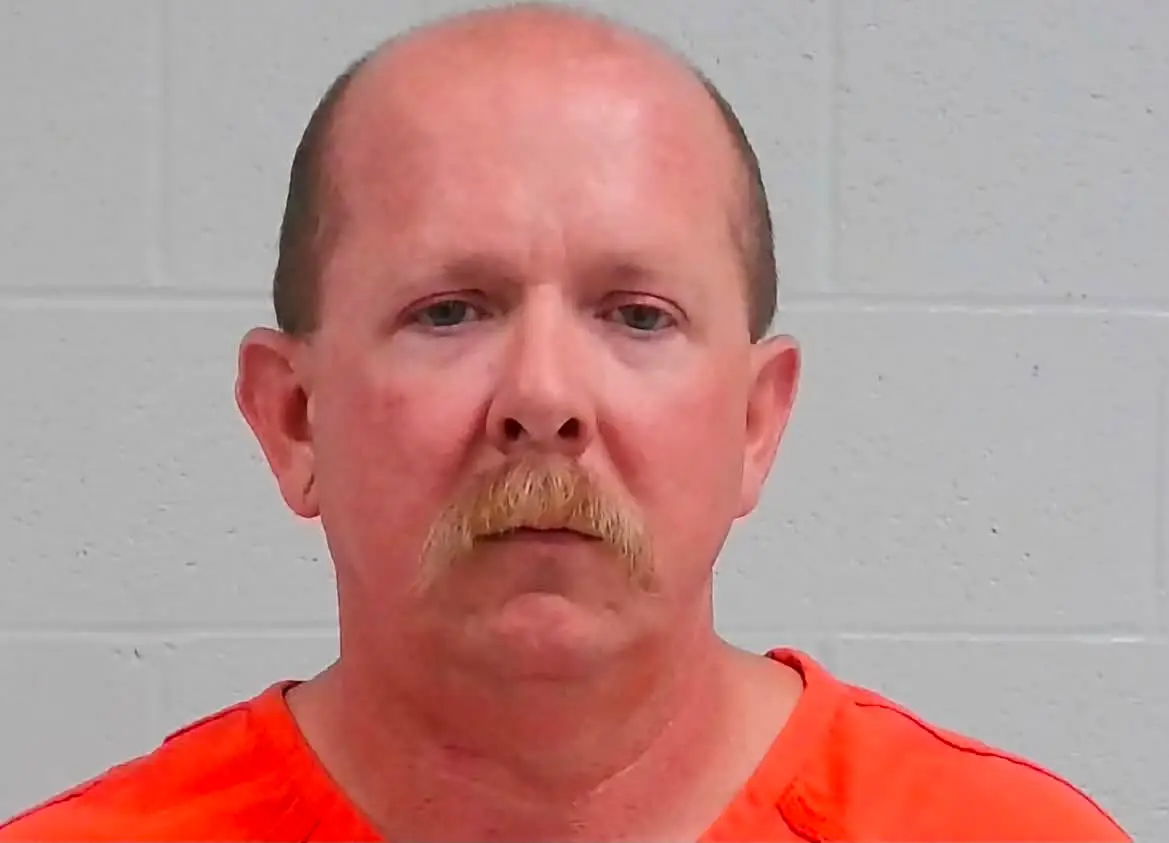
The officers involved were Detective Josh Golightly and Captain Jon Broom. Here are statements they made during the investigation.
Golightly said, “I looked up and saw somebody that matched that description that we were given. I could tell that he was holding onto something. I just couldn’t see what it was.”
Broom said, “We all have our, our weapons out, assuming he’s armed and he just seemed like he was trying to just gain the courage to pull the gun out and shoot us, you know. And in, in my mind, he thinks he just killed his damn dad. You know? And what’s shooting a police officer at that point?”
I will come back to this later — for now, it’s context.

A woman named Redd started speaking. Her voice is strong, so she initially rejected the mic. “I’m the mother of 8 boys and 1 girl. I fear for my sons to walk outside every day. Every day. As a black young mother, my grandmother’s not here, my mother’s not here…” This is when the NAACP President offered the mic to her again, and she chose to speak through. “So how can I encourage my boys to trust into the law? To trust into the teachers? How can I teach and trust in my sons to be a part of the community? How can they walk without being scared of their color, or somebody different?” She pats her chest. “I’m their mother.” “The younger generation, we’re upset, how can we lead and teach our own young men to stand on their own 10 toes?” “We have to fight, and we have to stand 10 toes down behind Lloyd Gilmore. End of discussion.”

After this, Wiggins made some more comments, speaking more directly to young men. He said, “We need to love, guard, and stand with our young sisters. As it comes to YN’s (a term that means young n-words), we have to stop running around making babies and bring things back to the family.”
Someone says, “stop making babies?”
Several folks around repeat in a whisper-like question — “stop making babies?”
Clearly, he did not mean to stop making babies, but that broken homes are causing struggle.
One woman understood that, but raised her arm in question over its significance — “broken homes get black kids killed?”


The next speaker jumped right off this topic. “Broken homes, yeah, that’s a generational curse. Which, we know, a lot of curses have been put on our race… for… ever. But those 400 years are up. But where we went wrong was when we wanted to be equal with everyone else, but as we can see, that was a setup!” “Through the years, back when I was in school on up, they used our athletes for the gifts they had, and they promised them scholarships and they promised them a ride to whatever school that they wanted to go to, and it never happened. So what did they turn to? The streets.” He said he believes there is a goal or a means to an end, which is, “extinction.” He believes we see this in the ways that school programs influence children. “They’re set up as prisons, and that’s the way it’s always been.”
I see these comments as critical for everyone to consider. The feeling of a lack of substantial change — beyond the scope of policing, into the scope of societal conditions — is there. In a way, some people feel like their involvement in the larger racially diverse community comes at a cost, a cost many are tired of paying.
This indicates another problem, one that history knows true, a history remembered in the name of the park folks are speaking in. When integration of the schools occurred, the all-black Lincoln school was shut down.

Harry Howard, who also spoke at the gathering, told me more about how the closing of the school affected the community. He said it was like a cultural hub — a place of meeting, gathering, and helping one another. When it closed, black kids had to join the white school, no white students were sent to the black school. True unity is a two way street — the problem is, here — it never was, not fully.
During the event, Mr. Howard took pride in speaking about his lineage in the area, as well as his hopes for the generations behind him. “I’m one of the early descendants of one of the early people of Sikeston. My father was the first black policeman, my teacher was the first black teacher to teach at the Lincoln school, my sister helped discover throwed rolls. I don’t say all that because of attention, but because this is home and where I grew up. I’m so happy to see the ministers, and their first ladies, here today. Some of our white friends, to see us all together. The whole thing is, us being accountable and working together as a community. I’ve known most of your relatives, I knew Mrs. Gilmore very well, his grandmother. Work together and try to solve our problems as far as division. We have so much between our churches, our families, and our community organizations.”

This seems to be a theme, the gratefulness to gather and be together. Lloyd Gilmore’s mother said, “it just makes my heart feel good, I feel so much better, I didn’t know that all this love was for my son and until I came out, I would not have known. Lord knows that speaking out for my son and what happened to him, him being murdered and stuff, was the best thing in the world, because closed mouths don’t get fed.”
That last statement she made — is a reason why folks marched to the Department of Public Safety.

On the way to the police department, protestors chanted — “Black Lives Matter! No Justice, No Peace! Lloyd Gilmore! F*ck 12!”
They held signs, and raised their arms.
But upon arriving to the police department… the chants began to change.
“All Lives Matter! No Justice, No Peace! Lloyd Gilmore!”
This change really stuck out to me. Despite all the anger and frustration, despite many younger and stronger members of the crowd feeling more tired of peace than the older crowd, folks still appearing taking an effort to use language that resonates more deeply with the person “on the other side.”
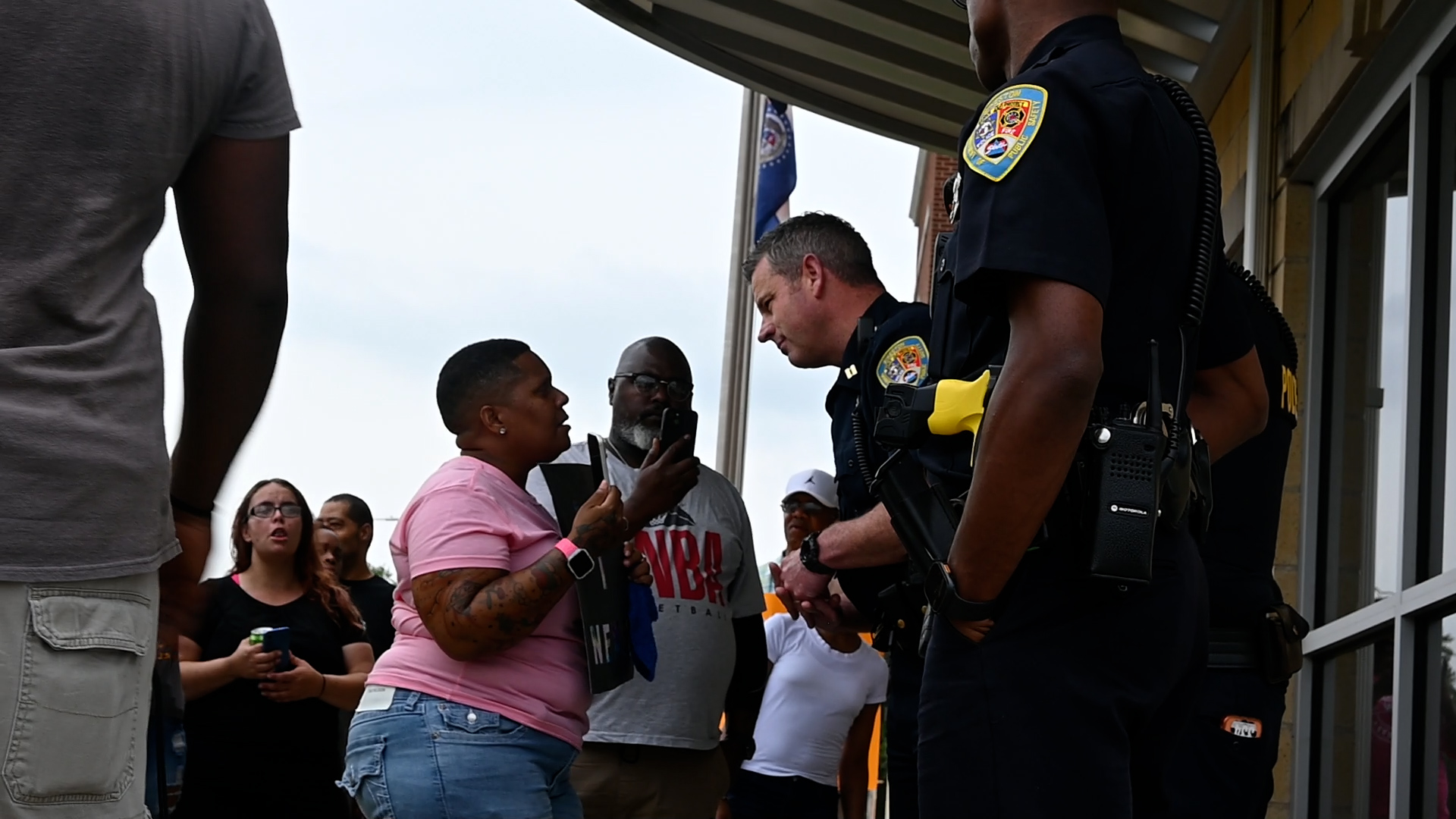
Within a few minutes, officers came outside. First, was Captain Broom. This is why those details from earlier are important. Captain Broom and Detective Golightly were investigated, but the decision by the Missouri State Highway Patrol was that they acted reasonably, not criminally, under the circumstances.
There were moments that mirrored the protest for Denzel. Particularly, the way protestors entered the police station.


Knowing this detail, Captain Broom is the last person I’d expect to walk out of that department. Yet, he was the first. There were loved ones of Denzel Taylor in the crowd. Six years is not a very long time, but since then, changes in the attitude of leadership have taken a turn. The person championing those changes in the public eye, however, was not there.
Captain Broom first spoke with the sister of Lloyd Gilmore. After their conversation, once officers went back inside for a moment, I asked her what they spoke about. She said, “we wanted to speak to Chief McMillen because, we want answers. Before this incident happened, Chief McMillen was always there at the NAACP meetings, he was always around. But where is he now? We’re up front, we’re outside, where is he? We want answers from him. We, the family, all want to know what’s going on… They’re portraying Lloyd as the aggressor, but Lloyd isn’t here to talk. We want answers, we want justice. The time is always right to do what’s right.”
Chief McMillen was on vacation.
Also, though, that same documentary mentioned earlier — Silence in Sikeston — highlights the efforts of Chief McMillen. Quoting the documentary, “I think our failure, sometimes, is that we don’t really consider ourselves an entire community.”


With Chief McMillen on vacation, Captain Broom is now the one who must address the crowd. “We handed the investigation over to the Missouri State Highway Patrol, so they can do an independent investigation.” “I think information right now would help the situation a lot better than what it is, but unfortunately, we cannot comment on it right now.”
The chanting and multiple questions follow. It’s realized, this was not enough of an answer for the crowd.
Eventually, he appears to get more personal.

“A lot of you guys know me, and I hope you trust me.” In the background, someone screams, “f*ck the police!” More questions follow though.
“Why can’t his mother see his body?”
This question actually could not be answered by him, but by the coroner who was scheduled to perform the autopsy. According to the coroner’s office, the body must remain sealed until the procedure begins to protect the evidence and the integrity of the investigation.
When someone asked a question about the body camera footage, he said, “if I could show you, I would.”
“Are the officers under investigation?”
Officer Broom says, “the Missouri State Highway Patrol has to finish their investigation before we do an administrative investigation. Meaning, they have to make decisions before we do.”

Yet, protestors had another strong point, one that was quickly overlooked. Someone said that officers, cops, law enforcement — they have a buddy system, a sense of mutual identity, and because of this intense togetherness and mutual identity — the likelihood of a fair investigation, even from the state patrol, is unlikely.
Someone then asks another question —
“Officer Broom — were you on the scene?”
“No, I was not.”
“I’m looking out here, and I recognize a lot of people that i’ve known for a long time. And I want you guys to know, and you’ve known me, I’ve always been fair, I’ve always been honest, and I’ve always treated people with respect—”
Someone says “but you were on scene—”
“No, no I wasn’t. But What I’m trying to say is, I hope you guys that know me, and trust me, and when I tell you—”
“We don’t trust nobody right now.”

Chanting — “No Justice, No Peace.”
“I just want—”
“Y’all, let him finish!”
“I just want you to know that a fair, and honest, investigation will be done by the Highway Patrol, you guys will get all of those answers that I wish I could tell you today.”
“How long does it normally take?”
“I wish I could say, but I don’t want to give you an answer and it not be right.”

Eventually, some protestors move to protesting across the street. Captain Broom continues speaking with folks who have questions, and he slowly makes his way back toward a door to go back inside, but his exit is followed by a downpour of rain. While his answering of questions did seemingly help ease the crowd, including some family members who really truly just wanted answers… others, cared none for those answers.
To determine what happened here, we need facts, and this is what protestors said they wanted to see. However, those facts are still under investigation by the Missouri State Highway Patrol.
An investigation underway does not change the fact people are angry, with reasons to be angry. People have various reasons for distrusting the police, as well as the integrity of the Missouri States Highway Patrol’s investigation. Many i’ve spoken to say, as quoted earlier, “We don’t trust nobody right now.”
With family members of Denzel Taylor in the crowd too, who might have shared a glance with an officer responsible for that death — I think this is something worth noting.

On either side of the protest at the police department, there is seemingly a level of hope to believe that things could be better. Despite his experience and history, Captain Broom still felt safe enough to leave the building and speak with the crowd. This must mean, to a degree, he believed the people there would not harm him. Meanwhile, the pains protestors expressed go beyond policing, despite that being the main point of contention.
There are so many different ways at looking at what happened this weekend, so I did my best to be fair, and to humanize every individual involved.
The largest note I’d like to make is thus — the older generation seems to be the force that cooled down or defined the nature of this protest. This was not absolute, however, the angrier ones were mostly younger. If another six years passes by and something else like this occurs under the same feelings of conditional struggle for the black community, I question how long things would remain peaceful; especially if senses of struggle in other areas of society worsen. If our community has sides, and one side feels that law enforcement serves one side more than the other — well, can a dynamic like this last forever?
The facts that emerge from the investigation — body camera footage, the autopsy report, surveillance camera footage, and the responses to those findings — will likely determine many things from here on.