In a debate hosted by Intelligence Squared, participants were asked whether or not they believe that Western Democracy is threatening suicide. Why is this debate a relevant one to consider?
This discussion was held back in 2017, and events since then have sourly dated it. Democracy and its variations are chief and leading political systems in the world today. The United States, being a military superpower that is governed by a form of Democracy, should be aware of the things potentially threatening the health, prosperity, and growth of its governing system. With that, the health of our governance affects the health of billions of people across the globe, considering America’s widespread influence and control.
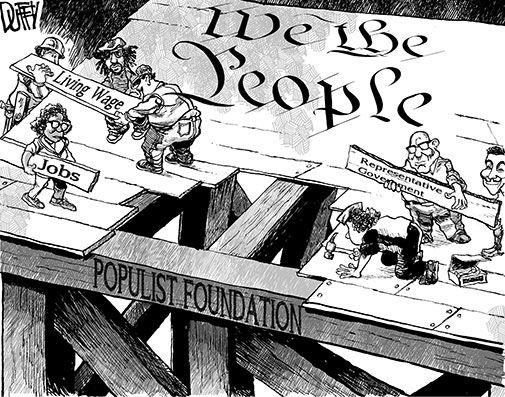
The political events that have unfolded since this debate have proven the assertions of Mounk and Levy disturbingly correct. One of the most important aspects of this debate topic included the rise Authoritarian Populism – which we see happening in the U.S., France, Germany, and Britain, just to name a few. Crook and Schake argued that despite the concerning nature of the rise in Populism, our democratic institutions are built to ensure corrupt leadership will be voted out; however, in their own argument, they say the point of democracy is to ensure leadership is consensual – so what happens when the people consent to tyranny? In my perspective, the debate from Crook and Schake was underwhelming, lacked substantive real-life examples, and had the sense that “everything will fix itself,” which I intensely disagree with. While acknowledging my own negative bias (an inherent aspect of the human psyche), I found very few points made by this team to be memorable or convincing. I will say they brought up very good points about Populism’s popularity; for example, Crook’s statement that Populism isn’t inherently anti-democratic, as it stems from populations feeling out of control and desiring strong leadership.
Populism is a campaigning approach that appeals to ordinary individuals, promising to put their needs first – and while Populism is often associated with far-right policies, the tactic can be used by either side of the political spectrum. Professor Mounk cited statistics regarding views on democracy, saying “while two-thirds of individuals born in the 1930s and 1940s said living in a democracy was essential for them – less than 1/3 of millennials say the same.” He then goes on to argue there’s a reasonable disenchantment with current leadership, which fueling the decline in democratic values; as people struggle, they become understandably susceptible to promises of better days, even when the leaders spewing these promises fall short. Mounk actually predicted the future in this debate, saying “we have another election coming up, so what’s going to happen in 2020?… [will Trump] say yes, I lost fair and square… or is he going to rouse up his own people to rebel against the election?”
I really liked the arguments given by Philosopher Levy – as he used historical events and concepts to guide his logic. In particular, he pointed out how Greece, the birthplace of democracy, is currently watching their democracy die – whether you’re a philosopher or not, that symbolism speaks for itself. He also mentions how empires we thought dead are on the rise again – for example, Iran connecting with their roots in the Persian Empire. Another argument of Levy’s I hold in high esteem is that there’s a “corruption of the democratic spirit,” in which people believe every circumstance has only two sides… henceforth breeding partisanship and polarization. Levy’s partner Mounk also made a point of this two-sidedness, saying “because there’s a steep spirit of animosity of partisanship anytime someone has power, they use it to the max… then it goes into the cycle of [gridlock] and it becomes impossible to deal with real problems.”
I say it is foolish to overestimate the power of any system of governance, especially one as important as democracy. While Schake is correct in saying the democracy has “antibodies” to ensure our rights are not undermined – many people had antibodies from COVID-19 when the virus killed them. Democracy is an imperative political system that ensures power to the people, but in the words of Levy, that means people have to be responsible with their voting choices – “if the people are king, and they make a bad choice, they are accountable for that.” I agree with Cook that while people may vote for Authoritarian Populists, that doesn’t necessarily mean they want power taken out of their hands – however, humankind is prone to supporting leaders that don’t uphold their promises.
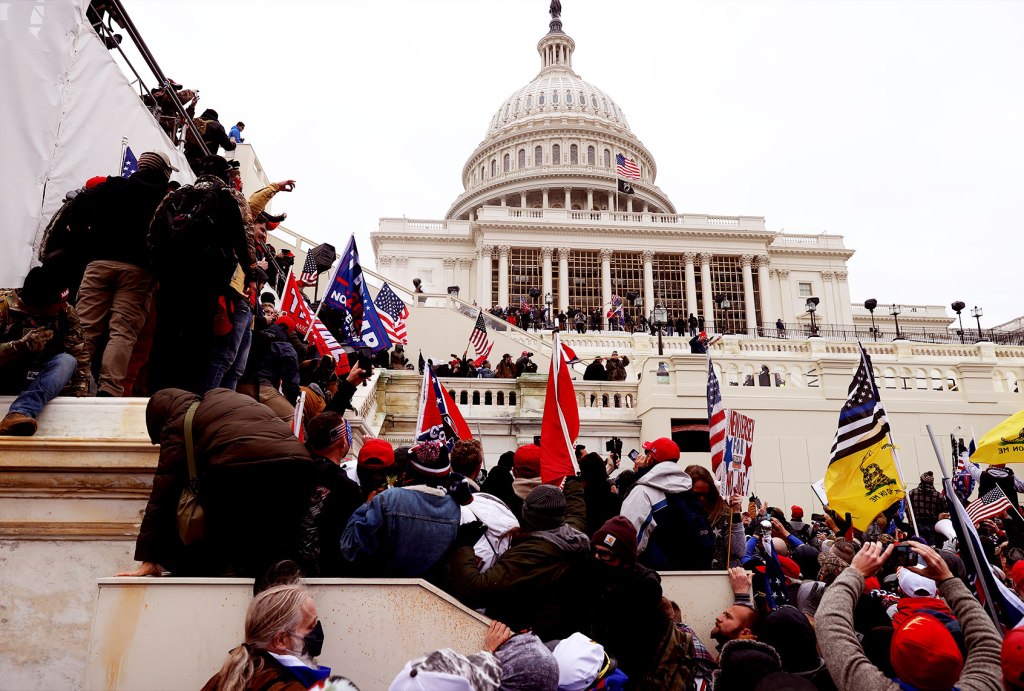
Since this debate, supporters of former president Donald Trump have stormed the Capital in response to his loss against Joe Biden – and Trump himself faces four indictments connected to his alleged efforts to overturn the 2020 election results. Despite the controversy, Trump is on track to face-off President Joe Biden again in the 2024 election. Today is a time of seriously concerning division, with nearly-half of America still sympathetic to Trump, and the other nearly-half doing scrambling to prevent Trump from obtaining office again; in my view, the latter “nearly-half” is doing everything other than addressing the root issues leading to Populism’s attractiveness – henceforth, inadvertently building Trump’s platform for him. Paralleling Mounk’s prediction, I raise equally disturbing questions – if Trump wins, would he accept his limit of 4 years? If not, how many people would do something to ensure he did?
Works Cited
Intelligence Squared U.S. “Western Democracy Is Threatening Suicide: A Debate.”



 GWYNETHICS
Leave a comment