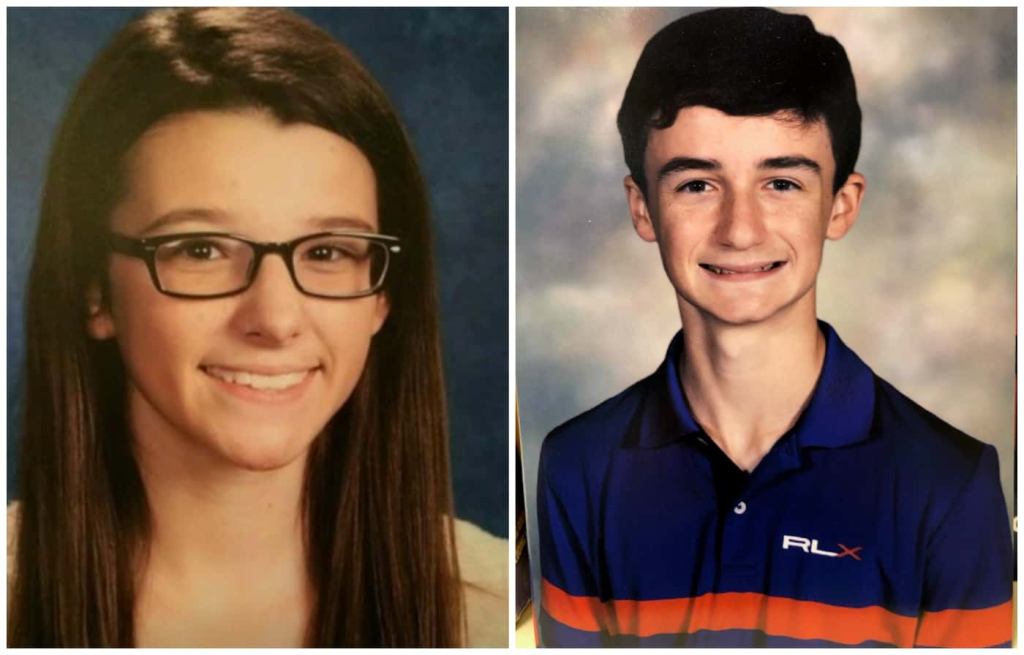
This is an incomplete and ongoing piece that I am working on. This story is my main passion in life, it is why I write, it is why I do most things. I have left out so many details, events, and explanations of hurt because I don’t feel like I can talk about it properly yet. Still, there are some things that I want to be out there already, and ideas that I need to share.
“I don’t know why, I don’t even think he knows”
I was 15 years old when I heard those words, sitting on the couch of a grandmother I loved to death, about 6 feet away from the room that my childhood best friend – a school shooter – used to sleep. He killed Bailey Holt and Preston Cope and shot more than 14 others at Marshall County High School on January 23rd, 2018. I did not go to school there, I was not a survivor.
Kentucky Lake was my second home growing up — its where my heart and soul was. Seldom in my childhood did I ever feel like an actual child. My only memories of feeling free the way a child should were at the lake, chasing fireflies with the redheaded boy next door, Gabriel, or flying into the water at the ‘rope beach’ – where I had to take shelter during a tornado when I was about 6 or 7. I sat and cried under the embankment with Gabriel, who saw my tears and abandoned his unfinished sandcastle to hug me, saying “we won’t get hurt, we’re all gonna be okay.”
On January 23rd, 2018, I sprained my ankle at school. Before I left, there were people talking about a school shooting, but not here. It bothered me, but my ankle bothered me more. My grandmother came to pick me up from school and take me to the doctor, but she did not first ask me how I was doing, instead she said “Marshall County was shot up. We don’t know if the twins and Gabe are okay, I know nothing.”
“Oh.”
I felt nothing, not even my ankle. At least for about an hour. I was waiting to get an x-ray, scrolling through news articles for an update, trying my best to figure out the real death toll, when my grandmother told me the twins were okay, but “I cannot get ahold of Gabriel’s grandmother.” From this point on, I just… the question popped into my brain, “what if he did it?” From that moment, I knew… I just knew. There are unreasonable, superstitious reasons why I knew. I did have a dream the night before, and the only reason I am comfortable sharing that fact is because it bothered me so badly that I crawled into bed with my grandma that night after waking up from it, and I told her why in the morning. It was vivid, it was dark, and that is all I will say about it. I often wonder how different I would be if I had never had that dream.
I mentioned earlier that I didn’t feel like an actual child most of the time growing up, and I didn’t. My biological father was absent and my mother was a registered sex offender, so she could never attend any of my school events, take me to the park, or participate in Halloween. I moved in with my grandparents when I was 2 because my mom had to go to rehab, and I never moved back in with my mother. I had become attached to my brother’s biological dad as a father figure, but “Daddy Chris” hung himself in the closet, and my mother found his dead body while pregnant with my brother. I started attended therapy every 2 weeks starting at 6 years old. I found out about both my mother’s crime and the way my brother’s dad died on the internet when I was 12-13. My sister’s dad and my mother always fought, and when I was 11, I watched my 9 month old sister get thrown across the room during one of those fights. I had to call the police. They did not divorce until May of this year. I lived in a different house than my siblings did growing up, so at least they had each other, but I always felt guilty for not being there to protect them. I had a safe, loving environment with my grandparents — but my mother was always a shadow lurking around, and so was the guilt I had for not being with my siblings. I always felt like I had a responsibility in some regard, either to be the opposite of my mother or to protect my siblings. Then when I found out my mother was a sex offender, I felt like loving her was immoral. At least I got experience knowing what it was like feeling guilt and shame for the crime of someone I loved.
Nothing I’ve ever been through has affected me more than the aftermath of Gabriel committing the Marshall County Shooting. Nothing. It changed me forever. My sense of safety was ripped away from me, I was forced to face a truth about humanity that few people can fully understand or even comprehend, and for simply having loved and been loved by the kid, I felt like I had blood on my hands. I felt as though my failure as a friend led to the deaths of 2 children, the suffering of their families, the suffering of Gabriel’s family, and the suffering of an entire community. I felt like I was cursed to have loved and been loved by people society deems as “monsters.”
At 15 years old, I watched practically the entire nation react to an act of evil I was entirely affected by and felt intrinsically connected to. I saw Gabriel become labeled an evil monster, and I wanted to be able to agree, but all I could remember was the innocent little boy who wiped my tears and took away my fear in one of my core memories. I went to the gym, hoping to get away from my phone and social media, just to look up at one of the TV’s and see victims at a vigil that I wished more than anything I could attend. I opened Twitter to see that President Donald Trump had shared condolences for the victims, feeling like his “thoughts and prayers” might not have been necessary if I had been a better friend. I saw a post on Instagram basically saying the shooting didn’t happen, and when I commented that I knew the shooter’s family, I got harassed by several online paranoid schizophrenics convinced that I was a CIA operative. I’ve read through a Washington Post article about the shooting, which happened to end on a photo that featured my favorite dog their family ever had, a chunky and loving beagle.
A couple weeks after the Marshall County Shooting, the Parkland Shooting in Florida happened, so my school held an assembly to discuss safety plans and to answer questions from the student body. I remember sitting on a gym floor and listening to police officers say how unlikely it was that our school would experience a shooting, how even though the shooting was close to home, we hadn’t been affected yet, and I wanted to rip myself out of my skin. Fuck do you mean we? Then, some girl got up and started screaming about the bullshitness of response plans, and honestly, nothing of what she said made any sense. I could only remember wishing she would shut the fuck up, and considered getting up to tell her that. I fought tears, and instead of running out of the building, I daydreamed of getting up and screaming at the entire room — about how ignorant they were, how stupid it was that I was even having to sit through the assembly, the irony of their statement of likelihood considering the unlikelihood of my own situation, how I hated this place, how alone I was, and how hurt I was. I wanted someone to know, I wanted someone to see, but I knew — that was never going to happen. Realizing I could not grieve my pain, that my trauma would fall on deaf ears, and that my anger would be seen as delinquency — I buried all the trauma, fear, grief, and feelings somewhere deep within my soul; I still have not fully dug it back up.
When I went to the lake that summer, the first thing I did as we turned the corner was stare at that door. Last time I saw it, Gabriel stood through it, waving me goodbye. Within moments — i stood in the same place… knocking, and then seeing his grandma open the door. She looked at me like I had 80 different faces, like she was trying to process all of them at once — an impossible thing to do. I think that, in her doorway, I did — in a way — have 80 different faces. Her reaction to seeing me was one of like, hesitance and complexity? She looked sad in general — for me, for her, for everyone. She also seemed anxious. I think I reminded her of her grandson, and she feared that I would see her differently, or hate Gabriel… and I think she had to grieve in a new way while I was there, because there should have been no reason for me to enter her home if Gabriel was gone. When we started talking about everything, I realized how… god, I cannot describe how dark the energy was. There was a sense of death in that house, and nobody thought to consider it would be that way. I knew to expect sadness, but what I found was so much more than grief or pain, it was pure anguish. I realized then, she was also a victim. She had never done anything other than love that boy, she might as well had loved that boy more than her entire life, and he forced her through hell because of it. She cried to me about how guilty she felt for what he did, how she thinks and cries for the families of the victims, for everyone who got hurt… but her grandson was not a monster, he was her baby, and she could not comprehend why he would do what he did, but no matter what, that is her grandson. She also cried about how the community had been treating her family, how alone she was in dealing with it all, but she never got angry — she only grieved, and expressed shame in needing to grieve. I realized there was a grave, vile version of injustice committed against this woman, and that I was the only one to see it for what it was. She lost her grandson (not his life, but everything about him that makes a grandmother happy to be a grandmother), she lost the ability to grandmother her granddaughter since they had to move away, she lost her sense of familial integrity, she lost everything that matters in one’s elderly days, and felt like the world must hate her for trying to salvage any piece of it she possibly can.
Sitting on her couch, listening to her grief and watching her apologize for tears that come from my worst nightmare, something inside of me started burning. By the time I left her home, my life had an entirely new meaning. My life would never again me about me, my happiness, my trauma, nor my grief. From that moment on, everything would be about making sure nobody would ever suffer the fate I had just seen. This was not a conscious decision; many people decide to change, and have to train their behaviors accordingly — my behaviors, thoughts, and state of being changed, and my consciousness of this followed. I stopped thinking of goals surrounding my own needs or desires, and instead, began to associate success with change, hearts and minds changed. I no longer thought of what made me happy, instead, I thought of my anger at the world, and worried about what I could do to change things. Unfortunately, I was only 15, about to turn 16, and the internet has nearly perfected the art of turning activist souls into agents of division, polarization, and hatred. I was an example of this until the point I was about 19 or 20, when my research started to become more complex and scholarly. I’ll come back to that later.
By the time I was 16, I think everyone knew me for my online political outrages. I look back at this and understand the error of my behavior, but I refuse to look back and consider myself a fool. No, I was not ignorant, and I was not immature. I was traumatized by a sensationalized crime, isolated by my secondary victimization, felt a sense of guilt nobody could understand, and was searching desperately for something to stop these crimes from occurring. I was 16 years old, and I needed to feel like I was doing something to wash the blood of someone else’s crime off my hands. My passion started with ending gun violence, but gun violence was not the root — it was injustice, and unfortunately, the current political climate promotes a disturbingly twisted image of what it means to fight injustice. Luckily, I eventually realized this, and began to consider polarization an injustice in and of itself. I have not stopped fighting injustice, by the way. I never will.
When I was a senior in high school, a scratch came over the intercom, and then a voice: “there is an active shooter, this is not a drill.” The moment I heard the scratch, I asked myself within a millisecond, “are they gonna say it?” They did. Yet, I’d heard no gunshots, and the air felt too calm, too safe. That might sound like bullshit considering it comes from hindsight, but it is true. I felt no sense of inherent danger, I only felt… numb. See, the entire week leading up to this day, there had been school shooting threats; there was even an assembly scheduled for the next day that was canceled because of the threats. I thought, “there’s no way this is real,” and it wasn’t. However, once the classroom got word that the threat was at the Junior High, and the lives in question were middle school children, I broke down.
I looked over at the girl who announced it, and I just lost it. I tried to console myself and calm myself down, but no amount of hiding my face could stop the tears flowing from my eyes or stop the snot from trying to fly out of my nose. No amount of telling myself, “nobody else in the room is crying. Stop crying. You have to stop crying” actually worked; because in the moments between telling myself to quit, I was convinced that kids had just died in the school that I used to attend, and that I would have to suffer everything all over again. I thought of everyone that I knew that could have done it, and I made sure none of them fit a potential “school shooter” personality trope. I cried, thinking that countless people would be interviewed, and selfishly, I was hurt — because my story had been ignored once, and I just… I did not want to have to feel so invisible and broken yet again. After a couple minutes of shaking and replaying the past couple of years in my head, remembering the look on Gabriel’s grandmother’s face when I saw her, my teacher called me up to the front to check on me. He looked genuinely disturbed that I was so disturbed, and he did not know what to do, but he couldn’t have one of his students inconsolable at a time when we are supposed to be quiet and calm. He asked, “are you okay?” I said, “do you know about what I went through?” He nodded, so I responded, “I just don’t want anyone else to get hurt.” After that, I started to calm down; I think the act of standing up and sitting back down helped me get out of that mental rut.
The entire situation, though, had been a false alarm. The story I heard is that a teacher was playing the movie ‘Home Alone’ quite loudly, and when a kid in the hallway heard those gunshots from the movie, they called the police to report an active shooter.
If guardian angels are real, maybe one turned back time that day. Maybe.
It was either soon before or after that situation when the family of Preston Cope walked into the restaurant I worked at with his face on their t-shirts. I had to serve them, and I wanted to, so I did – but it felt like… it felt like I was… hiding in plain sight. I was, really.
I wanted to say something to them, let them know who I am, but what good would that do? None. Absolutely none. This family is grieving, and no amount of pain that I feel should implore me to act so selfishly that I make someone aware of a fact that could ruin an already horrible evening. I did say something along the lines of, “is this all for Preston Cope?” The man that I had asked immediately went from smiling to… the most dismal, weighted frown I had seen in my life. Guilt washed over me, in full. I remembered, then, who I am, and the selfishness of what I had just did. I should not have even asked, because I knew.
So, I served them with a smile on my face, and it was the most inhuman thing I believe I have ever done. To do that required me to… I guess slip out of full consciousness, frankly. For years, I did not even remember that this happened – I did not tell anyone either. I don’t remember anything from that day, other than what it was like to interact with Preston Cope’s family.
At 17 years old, I smiled in their face like my childhood best friend was not the reason their son was dead. I smiled and was kinder than I was with anyone else – remembering what it was like sitting down with the grandmother of the boy who killed their son… knowing, that no matter how hard I cared now, I could not go back and be a better friend. I could not go back. All I wanted to do was cry and apologize to them merely for existing – merely for feeling so… selfishly shattered. Who was I to feel so much pain? Nothing had been taken from me – I wasn’t even connected to someone who was harmed – my connection was to the harmer, not the harmed. My connection to the entire ordeal positioned me, inherently, on the side of someone who committed one of the most evil, atrocious crimes that plagues our nation today. My connection to those parents was only strung because of my connection to Gabriel.
I am not a victim, but to say I am something less than a victim would be… it would be wrong, I am not merely someone incongruently impacted. No, I am more than some justifiably forgettable ripple effect. I am… something undefined, I guess. I did not come to terms with the fact I had a right to feel traumatized until I was 19 years old, and sat down and talked with 2 survivors who… understood me more than anybody else I had ever spoken to. Later on, I worked with a survivor, and he shared his intense empathy and understanding. He also shared with me that he too had a dream the night before.
Having been close friends with Gabriel was indeed, traumatizing. Though, it is not what traumatized me most – it is the loneliness, the isolation, and the detachment from everything I thought I knew that truly stung me. The day after I found out Gabe did the shooting, I went to school. Of the people I told that day, there was only one person who looked horrified for me – the teacher I visited before school started because I had no clue what to do, but knew that I trusted her — my faith was well placed. Nobody else seemed to understand, but she did. Everyone else afterwards reacted like “damn, that’s crazy,” but could not see how horrified I was, not even my friends. I wanted to scream, all I wanted was to scream. Of everyone I have told about what I went through, survivors have been the ones who seemed to truly understand why I was hurt.
Today, nearly 7 years later, I am someone completely and utterly shaped and defined by my experience. I have never hidden the fact I was affected by the shooting, but I have never been this open about it. I have always been afraid of those who will not understand, or their questioning of my morality, my experience. Nonetheless, my story only matters to me because I have learned from it, and frankly, I plan to use it. From the moment I realized my efforts (arguing online) to bring about change were counterproductive, I stopped arguing and started learning. As I mentioned earlier, my life is solely devoted to preventing injustice, because part of me feels guilty for not having stopped one from occurring… to fall short of this would be a betrayal to the children who died and Gabriel’s grandmother. I am not writing this because I want to heal from my experience, do not comment and encourage me to stop feeling responsible, because somebody has to. If it came down to it, I would be at peace living an unhappy, miserable life if it was one that furthered my cause. I am writing this because until recently, I felt like I deserved that unhappy, miserable, and lonely life that furthers my cause… but I do not think those things can coexist, and I realize I am human — hurt people hurt people, and I have to think I am deserving of goodness to spread it in some meaningful way.
The Rabbit Hole Begins
Deep within each and every single one of us, there is the capacity for evil. A combination of genetic makeup, childhood, society, experiences, and self-understanding is what decides whether or not a person will choose to use that capacity. This is a horrifying realization to fully understand at 15 years old — there is a reason we, as humans, create notions of monsters, demons, and otherized evils; humans are terrified of looking into the depths of their own soul, and when the depths of someone else’s are shown, the result is so horrifying that people refuse to accept its innate humanity. When the worst happens, we often ask “where is your humanity?” I hate this phrase, and I hate it with a passion. Humanity is not marked by goodness — humanity is historically marked by war, oppression, suffering, and hatred; humanity is also marked by friendship, triumph, happiness, and love.
Evil and goodness are not separate human natures. Evil and goodness are concepts defined by each other, and which could not exist without their common foundation in humankind. There is a quote by Haku Zynkyoku which says “a person of love is also a destroyer. This is absolutely the essence of the universe.” When I spread this philosophical understanding of mine, some people mistakenly assume I am attempting to justify evil or outright excuse it — but my intention is actually the complete opposite. The best way to prevent the manifestation of evil is to understand it within ourselves, and to raise our children up with that same value. The vast majority of parents consider their children angels, and could never imagine their child doing something downright evil, and this is true even for parents of rebellious or troubled kids. This must change. Our society must also make a critical shift in the way we think of our own capacities for evil — we should not hate ourselves for something innate to our nature. When I am asked if I expect my philosophy to actually stop evil from happening, I am left with more questions. I believe it would change the nature of evil as we understand it in society, but I also believe goodness would follow suit. The point I am making here is esoteric and you may be questioning the relevance of what I am starting to explain; understand, my story is not the critical aspect of this writing — my story will not stop school shootings, but I believe I’ve garnered an imperative philosophy that might.
The Role of Politics
The suffering endured by our entire nation at the hands of gun violence has, infuriatingly, become a moral and political weapon utilized by several Democratic politicians. However, Republican politicians have also committed acts of political corruption by taking funds from pro-gun organizations, refusing to consider gun regulation changes, ignoring or belittling organizations created by the survivors of mass shootings, blaming “mental health” while implementing policies which restrict access to psychiatry services, and promoting gun ownership while neglecting to even touch on the topic of responsible ownership.
I’m passionate about politics, and I still believe that policy is crucial to preventing mass shootings — but I do not believe policy alone will do nothing other than create more issues that lead to the same amount, if not more, violence and suffering. Our country cannot seem to agree on whether or not gun laws infringe upon our freedoms, and for good reason. For what reason should the American public limit its access to weapons, when it feels increasingly oppressed by its government, institutions, and corporate economic powers? It is sad that the Americans most passionate about their right to bear arms — rural Americans who feel at odds with or threatened by the political influence of cities, and who indeed suffer the result of “foreign” (urban) leadership via corporate influence and consolidation of vital industries — just fell victim to a populist, corporate city man who looks to destroy all influences which limit corporate behemoths. Rural America — which runs the industries that provide the resources necessary for increasing urban comforts, niceties, and innovations — refuses to limit their access to weapons for the sake of political power, rightfully realizing what an unarmed populous means for a corrupt government, but also gravely forgot that narratives can be just as powerful weapons as guns.
Moreover, I believe the root issues fueling gun violence are also shared, in large part, by the same root causes of frustration felt in rural America. The economy has been developing into a state wherein the industries of cities burst in growth, while the economies of rural regions either remain stagnant or grow slowly; this is critical to the divide between cities and the countryside. Voters truly started growing apart in this manner under George W. Bush, whose economic agenda included decreased government spending, tax cuts, support for oil industry, and deregulations in business. Rural voters tend to see these things are necessary for survival — for example, environmental regulations affect jobs, and changes necessary to circumnavigate this cannot be afforded. Nevertheless, we should not mistakenly accuse the rural working class of voting against its own interests. “Small-town elites,” upper-class business owners or otherwise well-connected leaders of small towns, have been vital in moving rural America toward these policies. The rural ruling class largely supports a low wage, slow growth economy with small manufacturers and industries — and chambers of commerce often represent these sectors.
This approach has resulted in two decades of rapid deindustrialization and economic instability in rural America, while the urban reality is one of growth and change. Donald Trump has garnered the steadfast support of elite rural figures by fashioning his rhetoric to attack the policies and politicians that promote high taxes and economic/environmental regulations, while also criticizing globalization and free trade with his promises of tariffs and tough trade deals. It saddens me, but it is also critical that I must mention the other aspect of Trump’s appeal — nativist, anti-immigrant rhetoric and patriarchal cultural conservatism. Contrasting liberal cultures have indeed flourished amidst the erosion of rural economies, and therefore, rural America has come to associate racial diversity and progressiveness as an inherent danger to its survival. Trump has successfully weaponized this false perception — obstructing intelligent people’s political field of view and convincing good-hearted people (who, like all others, hold racial biases and ignorant beliefs) that “others” are an enemy.
It is critical that we view all of this from the lens of modern globalization, and consider its increasingly critical impact on daily life. We should also revisit the issue of urban growth vs rural decay, as neither are exactly what they seem to be on the surface. Though urban growth largely comes alongside the rise of affluent Democratic leadership, we should not mistake all this growth for inherent good. With this growth has come the increasing power of corporations, the degradation of work-life balance, hyper-individualism resulting in an epidemic of loneliness, the increasing reliance on technology for daily tasks, stimulation need issues, and increasing attitudes of entitlement for instant gratification. Additionally, though environmental activists are largely found in cities, their passions for the natural world are usually what they have learned through screens or textbooks — it is the coal miner or the fossil fuels supporter who is most likely to intimately know the natural world around them. Though it may seem counterintuitive, it makes perfect sense — the knowledge of academics is gained in textbooks, but there is an equally important and valuable knowledge gained in an immersion with the natural world. People whose expertise belongs more to one of these sides than the other may turn their nose up at the other, saying “they’ve got their head in the clouds” or “their head is stuck in the mud.” This distinction between the rural and urban, the current realities and suffering experienced by both are different, but come as a consequence of the same things — America’s consumer-society, the increasing political power of corporate forces, and the decreasing political power of the individual via the degradation of life sectors which ensure the resources that uphold democratic representation and growth.
The Modern Societal Condition and School Shootings
There are two things which affect a person’s political habits most: the influence of family and the knowledge gained through education. A person’s first traumas are often experienced either within the home or at school. Though, we cannot place too much blame on either sphere — in most circumstances, the family conditions and schooling conditions are not too unordinary. A shooters’ experiences may be unfortunate, but are unlikely to be so extreme they struggle to find anyone who has not experienced something nearly the same. Additionally, the behaviors of parental figures and teachers/school administrators is unlikely to be anything distinct from the rest of families/schools in similar regions with similar socioeconomic status. Shootings are happening in both rural regions and in cities, so what connects the two?
School shootings are not senseless tragedies when you analyze the modern condition from a combined historical and contemporary lens.
Imagine the modern social condition as a web with:
- Points of intersection that represent literally everything (people, interactions, groups, ideas, places, etc.) with
- Varying levels of density/prominence based on how intensely they are affecting or being affected by the rest of the web
- Connecting strings with varying thickness based on intensity
- Special markers for trends of circular impacts, or revolving patterns
Having spent as long as I have constructing something like this in my own brain, “senseless” school shootings are not so senseless. Modern society has a deadly tendency — separating major issues influencing and influenced by political policy as separate from the other issues on which politics has an influence. If you apply this logic everywhere else, we have a real problem, one we might have had for all of time — tunnel vision. We must broaden our understanding of problems, solutions, and what change means — because frankly, we do more transforming current issues into different ones than we do solving the problem at hand.

 GWYNETHICS
Leave a comment