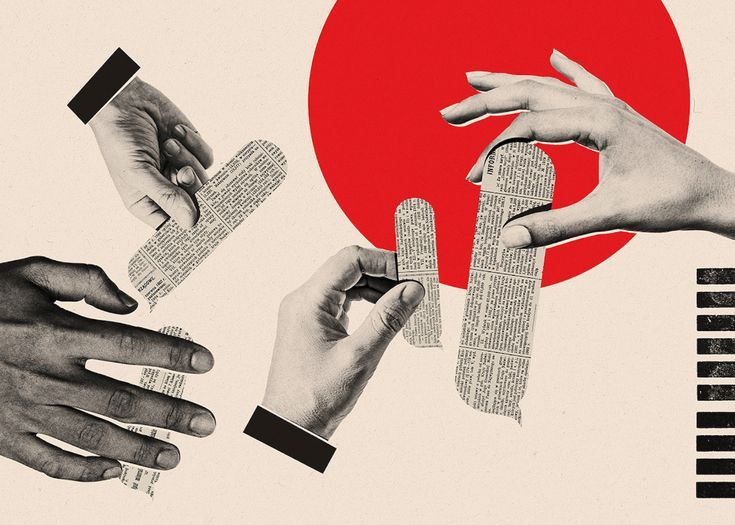
When people think of media bias, they often think of partisan media bias – that is, liberal versus conservative reporting tendencies. Partisan media bias is a very real and predominant issue, but there are other forms of equally important bias – such as affective bias and informational bias. Affective bias happens whenever pressures to grab the attention of distracted audiences are more prevalent than pressures to comprehensively inform the audience. Informational bias refers to the removal of information, context, and various perspectives from a story; informational bias also has sub-types, such as personalization, dramatization, fragmentation, and authority-disorder bias.[i] Public discussions and criticisms of mainstream media often neglect to acknowledge or consider these types of bias; this exceedingly worrisome, as studies show that in the current age of pernicious polarization – partisan bias is unlikely to be the media’s chief contribution.
When considering the health of democracy, informational bias is the most concerning type of media bias today. When crucial contextual information is disregarded in reporting – audiences are left with limited knowledge of the issue at hand. This type of bias is driven by the need of private media companies to gain revenue and “keep the lights on,” and that requires stories to be interesting. The vast majority information biases stem from the structure of our privately owned media system – which transforms political news and information into a consumer product.[ii], [iii] The sub-bias of personalization occurs whenever story focuses center around human-interest rather than on policy or the political process.[iv] While it is very important to portray how issues impact ordinary people – it is also imperative not to lose sight of larger political implications.
The fragmentation sub-type is whenever connected stories or events are reported separately from another – and this can often be a result of personalizing or dramatizing stories. An example of fragmentation is commonly seen in the reporting of mass shootings – these stories are often sensationalized, and habitually neglect to discuss broader trends of mass shootings, state and federal gun laws, along with the successes and failures of mental health treatment in the United States. The failure to report on broader trends such as those has been linked to the inability of citizens to correctly hold political leaders liable for causing and solving societal problems, as shown in the work of media scholar Shanto Iyengar.[v]
Affective bias centers around the idea that in media, negativity sells. Even though it is distinguished from informational bias, it’s my view that affective bias is largely connected to informational bias’s dramatization sub-type. Dramatizing a story is often a result of pressures to grab the attention of viewers – in doing so, journalists often pick out the most dramatic and crude soundbites possible from politicians. Research by Diana Mutz found that the uncivil presentation of information guides viewers to react more negatively to political advocates on “the other side,” and reduces the likelihood of them finding validity in oppositional arguments.[vi], [vii] Research by the political scientist John Greer adds to this issue, as it suggests that negative focuses in media only encourage political candidates to engage in negative campaign tactics in search of more airtime.[viii] All of this is especially concerning – because recent evidence shows that news media allow more speaking opportunities to extreme members of Congress versus their more moderate counterparts.[ix]
People pay more attention to negative information and consider it more when making decisions on their political stances.[x] Nonetheless, negative news coverage of politics has been linked to declines in political participation, trust in government, and *ding ding ding* – trust in the media.In September of 2016, Gallup reported that the public’s trust in news media dropped to an all-time low of 32%; while it went up from that point through 2018, it started dropping again in 2019 and 2020.[xi] However, the media’s focus on negative news isn’t the root cause of these low rates of trust in the media. While I’d love to be able to truthfully say the American media system is primarily based in the business of protecting democracy – the key word here is business, and as we currently watch the landscape of media begin to shift, the existing system has to keep up; the relationship between ratings and the economic success of news organizations is the seed in which media bias grows from – whether it be partisan, informational, affective, or all of the above.[xii], [xiii], [xiv], [xv]
Average citizens are not the only ones frustrated with news media today – in fact, recent surveys show that journalists themselves feel the industry is going in the wrong direction. The most reported frustrations cite a broken business model with insufficient pay, understaffing, and pressures to entertain audiences.Therefore, the experiences of those working in the American media industry coincide with recent research – both pointing to a malfunctioning economic model as the source of journalism’s contemporary crisis.In another survey – journalists were asked their opinions about why they feel there’s a declining trust in media. Nearly half cited political polarization, and around 20% said they believe it’s related to the general decline of trust in institutions – again, if recent research is largely correct, these journalists aren’t far off from the truth.[xvi]
The deterioration of trust in news media is also likely impacting the ways in which people seek out information.[xvii], [xviii]Research by Jonathan Ladd indicates when there’s an increase in media distrust, partisan selective exposure follows suit – thus, people are more likely to seek out and consume media that reinforces their own political predispositions. Ladd asserts that all types of bias – informational, affective, and partisan – are the foundations for declines in media trust. His research also points to the economic model, indicating that competition among media outlets habitually leads to lower quality levels in political news and less professionalism within the industry. The process of media distrust Ladd describes is multi-faceted and cyclical; as the public consumes increasingly low-quality news and criticism from elites (many of whom quite literally campaign against the media), they become distrustful of mainstream news and seek out more partisan outlets – yet, those partisan sources only promote distrust, further partisan selective exposure, and promote divisive political behavior.[xix]
To bring back trust in mainstream news media, public audiences need to feel it benefits them. The free press is the only job industry protected by the Constitution of the United States – thus, it’s time they acted like it. How can the American news media consider itself the free press when it’s held hostage by a broken economic model that relies on antagonistically polarizing soundbites from leaders, sensationalized stories that captivate audiences, and the necessity of making public information a consumer product? Getting rid of media bias would require news outlets to stop prioritizing the monetization of public audiences, and that would demand a complete transformation of the foundational structure of traditional mainstream media as we know it. While public ownership of media leaves the dangers of governmental interference and censorship in reporting, private ownership has proven itself susceptible to financially-influenced bias – bias of which has shown dangerous to democracy through pernicious polarization. As for the solution to this dreadful double-sided coin, I’m unsure. Although, I do envisage a day where that coin is no longer the limit to potential solutions – and American society looks to innovative solutions for survival of the free press and the wellbeing of democracy.
Works Cited
[i] Dunaway, J., & Graber, D. A. (2023). Mass media and American politics (11th ed.). SAGE Publications, Inc.
[ii] Bennett, W. L. (2012). News: The politics of illusion (9th ed.). Longman.
[iii] Hamilton, J. T. (2004). All the news that’s fit to sell: How the market transforms information into news. Princeton University Press
[iv] Dunaway, J., & Graber, D. A. (2023). Mass media and American politics (11th ed.). SAGE Publications, Inc.
[v] Iyengar, S. (2018). Media politics: A citizen’s guide (4th ed.). Norton.
[vi] Mutz, D. (2007). Effects of “in-your-face” television discourse on perceptions of a legitimate opposition. American Political Science Review, 101(4), 621–635
[vii] Mutz, D. C. (2016). In-your-face politics: The consequences of uncivil media. Princeton University Press.
[viii] Geer, J. G. (2012). The news media and the rise of negativity in presidential campaigns. PS: Political Science and Politics, 45(3), 422–427.
[ix] Padgett, J., Dunaway, J. L., & Darr, J. P. (2019). As seen on TV? How gatekeeping makes the US House seem more extreme. Journal of Communication, 69(6), 696–719.
[x] Dunaway, J., & Graber, D. A. (2023). Mass media and American politics (11th ed.). SAGE Publications, Inc.
[xi] Brenan, M. (2020, September 30). Americans remain distrustful of media. Gallup. https://news.gallup.com/poll/321116/americans-remain-distrustful-mass- media.aspx
[xii] Zaller, J. R. (1999, October 24). A theory of media politics: How the interests of politicians, journalists, and citizens shapes the news [Unpublished manuscript]
[xiii] Arnold, R. D. (2004). Congress, press, and political accountability. Princeton University Press
[xiv] Hamilton, J. T. (2004). All the news that’s fit to sell: How the market transforms information into news. Princeton University Press
[xvi] McManus, J. H. (1994). Market-driven journalism: Let the citizens beware? SAGE.
[xvii] 113 journalists surveyed on why they’re so despised. (2016, July 24). New York Magazine. http://nymag.com/daily/intelligencer/2016/07/media-survey.html
[xvii] Ladd, J. M. (2013). The era of media distrust and its consequences. In T. N. Ridout (Ed.), New directions in media and politics. Routledge
[xviii] Mutz, D. C. (2016). In-your-face politics: The consequences of uncivil media. Princeton University Press.
[xix] Ladd, J. M. (2012). Why Americans hate the media and how it matters. Princeton University Press.



 GWYNETHICS
Leave a comment