
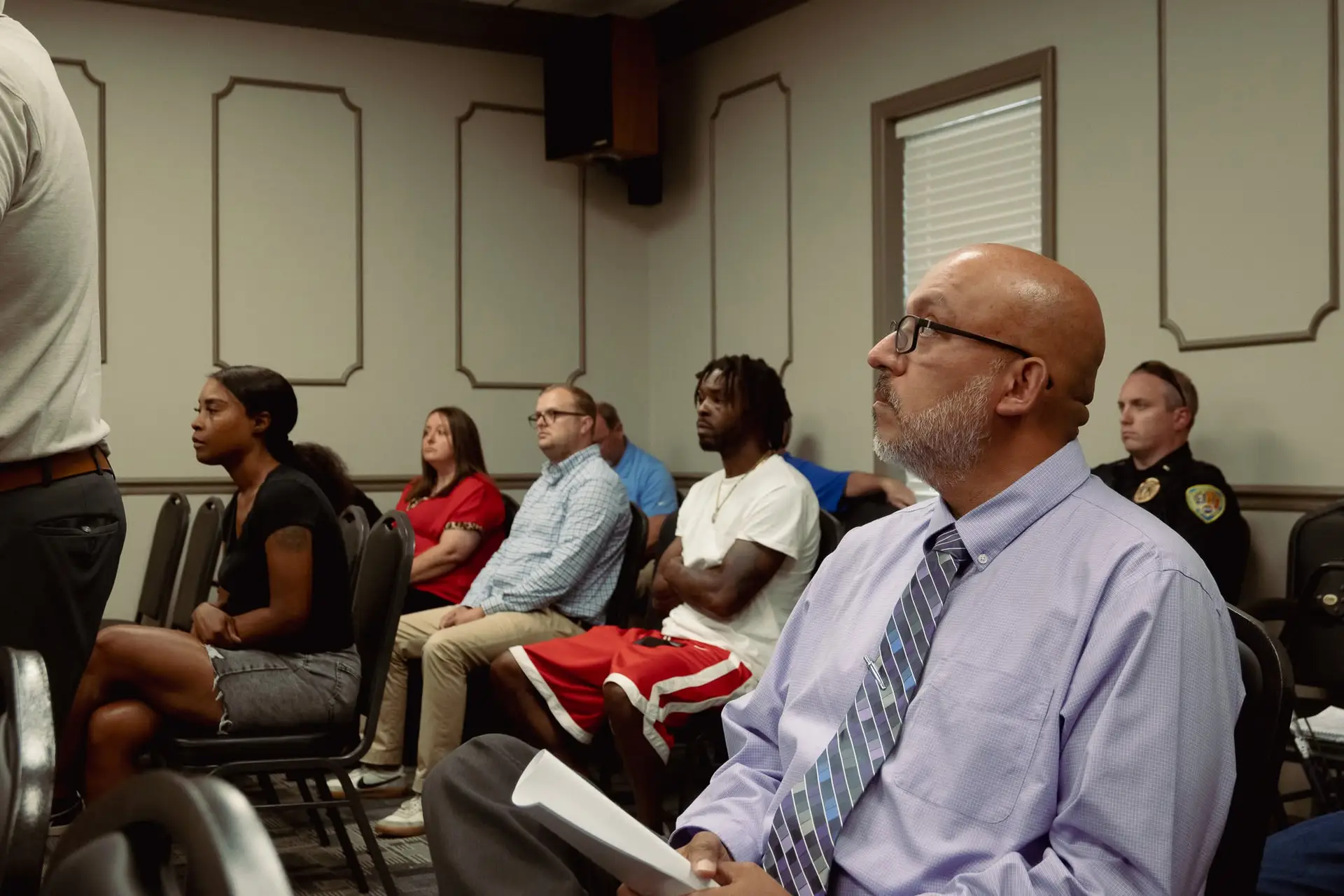
The second Sikeston City Council Meeting since the in-custody death of Lloyd Gilmore happened yesterday — and at one point, the room was nearly packed. The meeting lasted just short of 2 hours. This is a huge difference from last week, which saw a low turnout.
The official business was quite similar to the week before, but that’s not why the crowd was there. The crowd had questions over the death of Lloyd Gilmore, the investigation into his death, and how the city plans to respond.
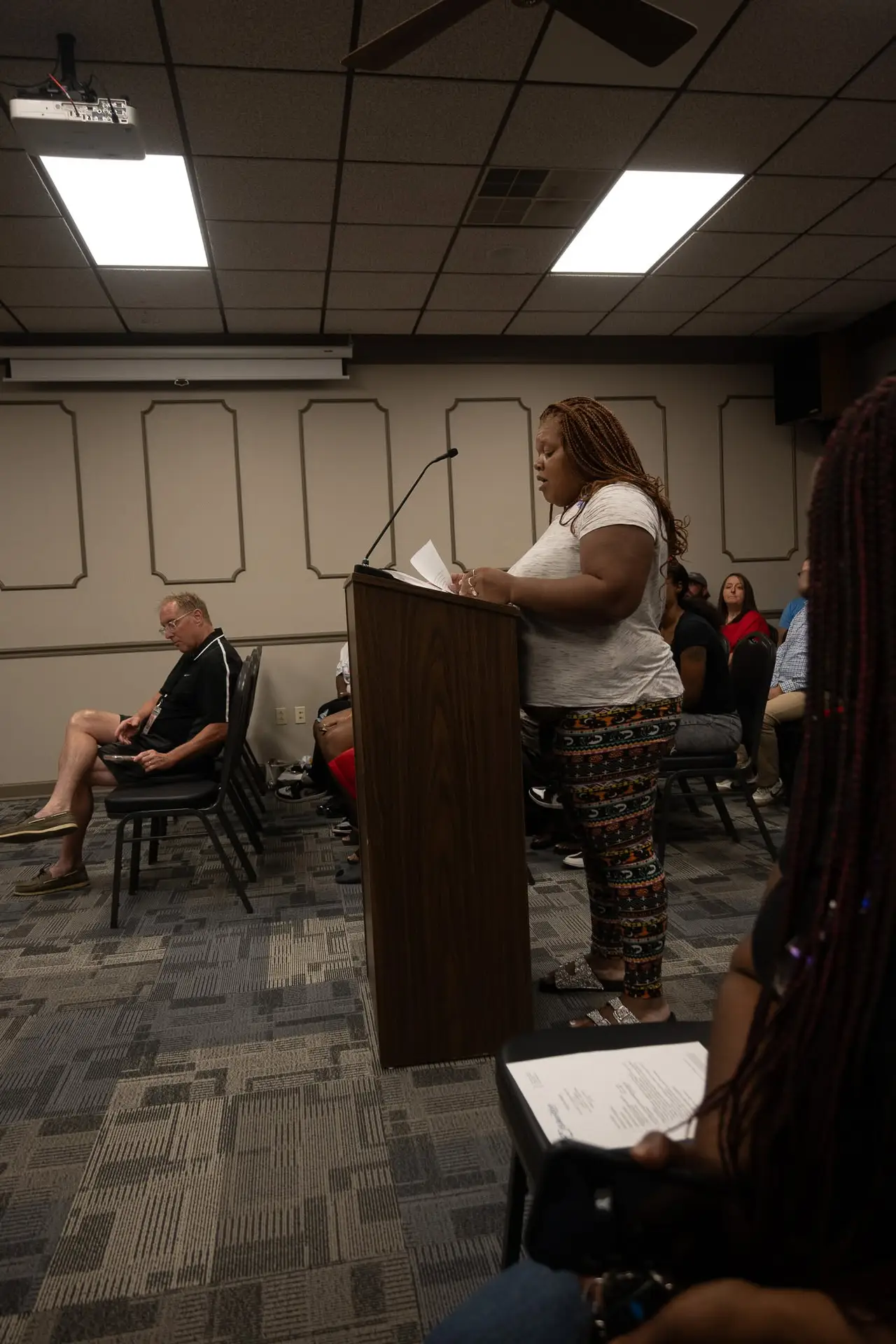
The first speaker during the comment portion was Redd Grant. She took issue with the fact involved officers are still working and active in the community. She believes they should be put on suspension until the Missouri State Highway Patrol’s investigation is complete.
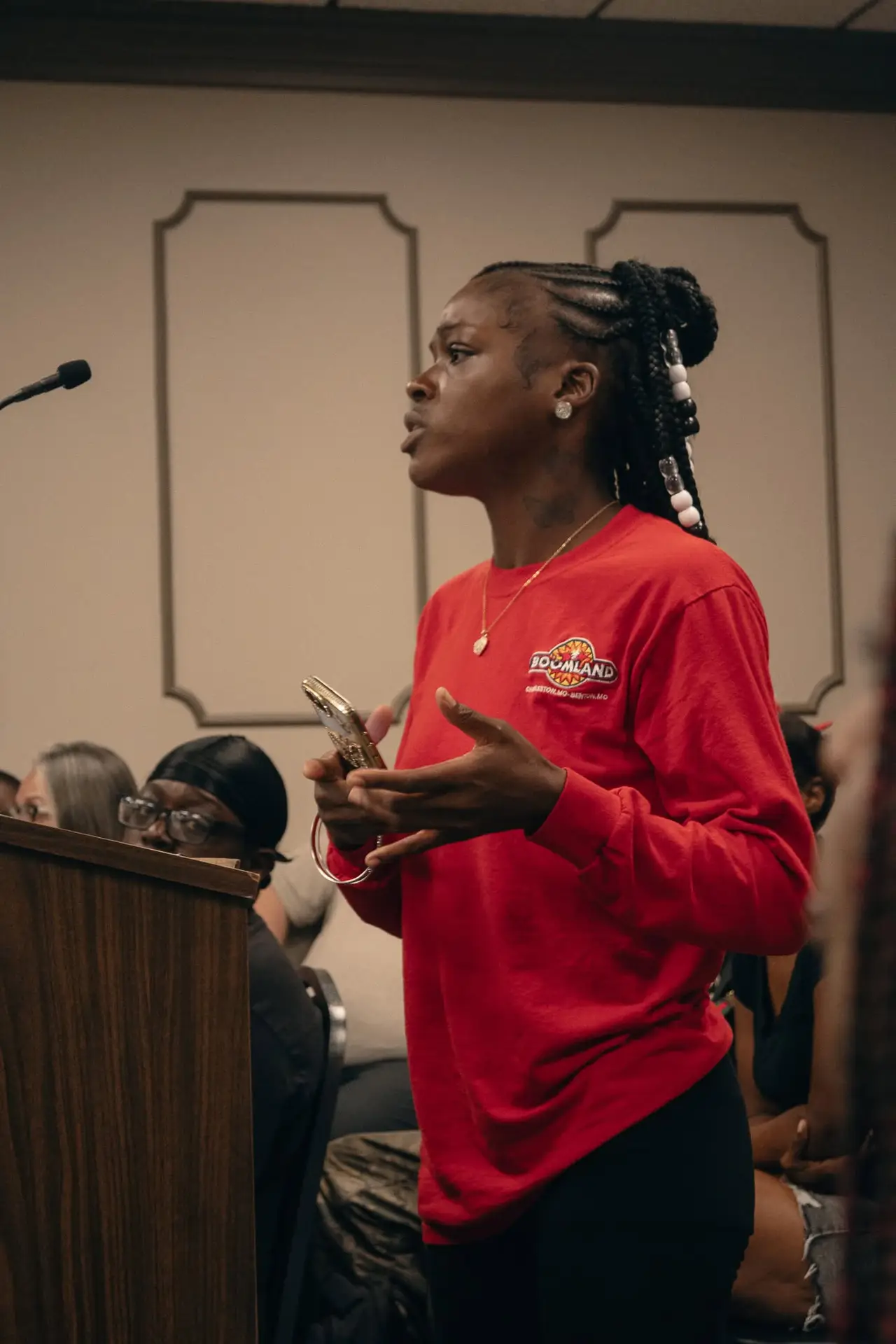
Then the daughter of Lloyd Gilmore, Lania Gilmore, took to the podium. Lania had questions about the police report regarding her father’s death. She wanted to know whether or not it had been filed, and if the public could have access to it.
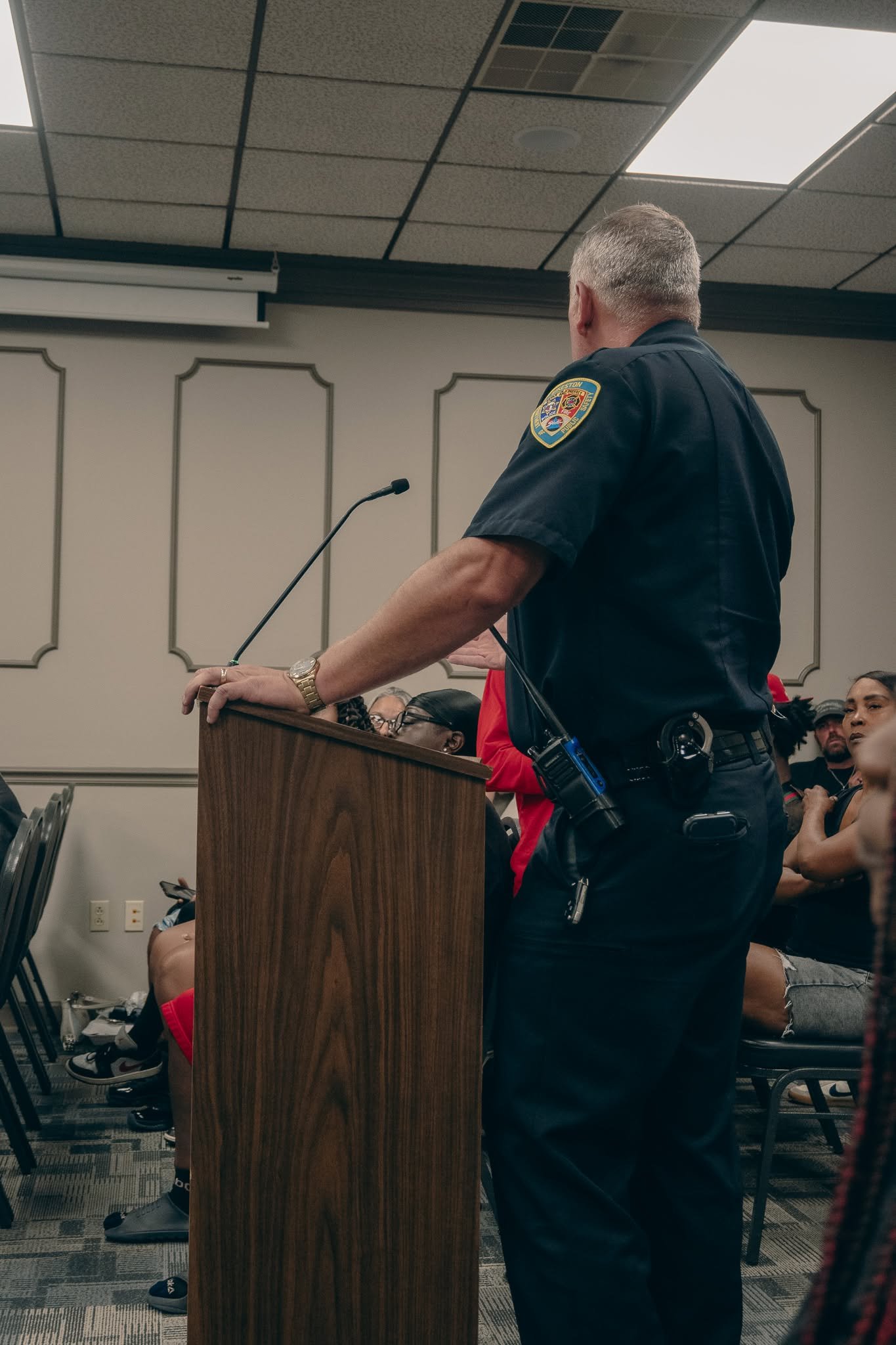
Chief of Police James McMillen was at the meeting, and walked up to the podium help answer some questions. “The report has been made, but the investigation was given to the Missouri State Highway Patrol…”
“If I did all the interviews, which I didn’t do, because the Highway Patrol did that, and I got all those answers… would you believe me? Most people wouldn’t, and I know that…”
Lania says, “I’m not saying that you have to make us believe y’all, but I’d like to see y’all include everything—”
“We have to let the Missouri State Highway Patrol do their investigation first, we can’t interrupt their investigation.”
There seems to be a misunderstanding over what can and cannot be done during an active investigation. There also seems to be confusion over what the process to release information looks like.
Lania told the council — she made the 911 call that led to her father’s death. She expressed frustration it was never mentioned by police to the family or publicly. Chief McMillen, and Mayor Turnbow explained — this would be information that’s under investigation, and therefore, it cannot be released. Regardless, it seemed important to her that she called the police needing help for her father, but he wound up dead over it. She placed her trust in them. She wanted that to be acknowledged.
Speaking of trust, the week after Gilmore died, folks expressed distrust in the Missouri State Highway Patrol’s ability to perform an independent, fair investigation. People noted the mutual identity of law enforcement, and wondered how it could influence findings. This reasoning makes sense, but there is a recent case where the Missouri State Highway Patrol charged local law enforcement with a crime. On June 17th, after Gilmore’s death, the news came out that Southeast Missouri State University Campus Police Chief Dr. Richard Flotron was charged with two felony counts of forgery, as well as two misdemeanors, after allegedly giving away test answers.
Lania Gilmore brought up another concern I’m very interested in. She mentioned how much easier it seems for media outlets to receive or find information. “All I know is, I see the news connected to a different category than we are.”
This brings up an important concern that I have too — many folk do not know how to communicate with public officials. People do not know which questions to ask, which questions are relevant, what authority certain sectors of government have, etc. Trained journalists are trained in the process of verifying and explaining. Local news, though, is struggling. It’s significantly less robust than 1980-2004, and I worry this has an impact on people’s connections to their local communities.
Timeeka Taylor, the cousin of Denzel Taylor, who was killed by the Sikeston Police during a 2020 incident, also had questions. “I’m assuming the call she made was to get him some sort of mental help. When they received that call, why wasn’t EMS there to meet him before it escalated the way it did?”
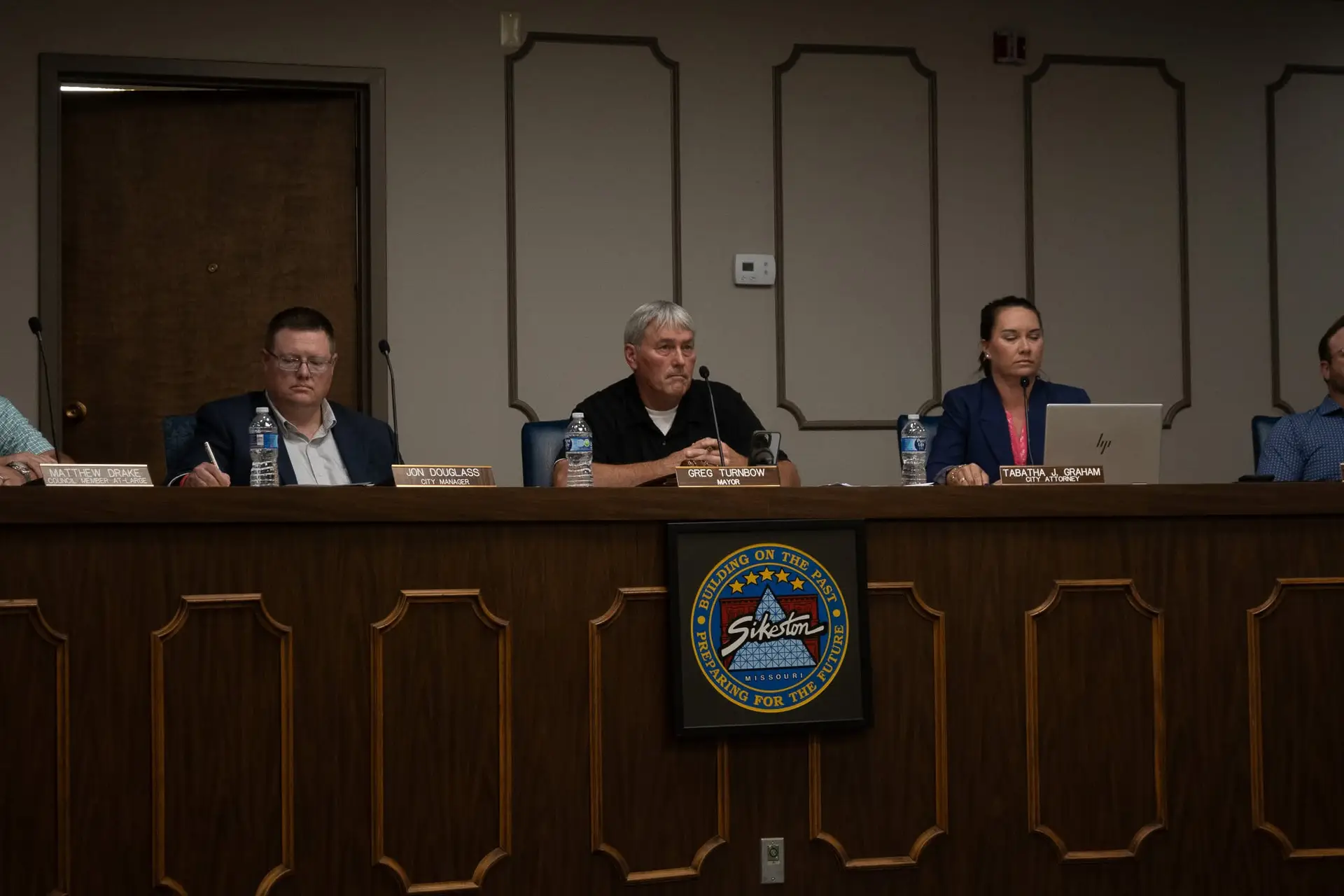
Mayor Turnbow said, he did not even know a call was made until Lania said so, and that those details would be included by the Missouri State Highway Patrol’s Investigation. Timeeka Taylor also had another question.
“How do I know if I make a call for help, that I will be safe? Because I don’t feel safe. As far as the Chief, he has been there for my family on a few occasions. He was there for my cousin’s murder trial, he was there to help his mom through her grieving. I don’t trust the rest of them, because I don’t know where they’re at mentally. Is there some type of training, or maybe even the hiring process, where something can be done differently?”
Mayor Turnbow said, “they do train, and if any laws or procedures are broken, it will be handled, just like anything else.”
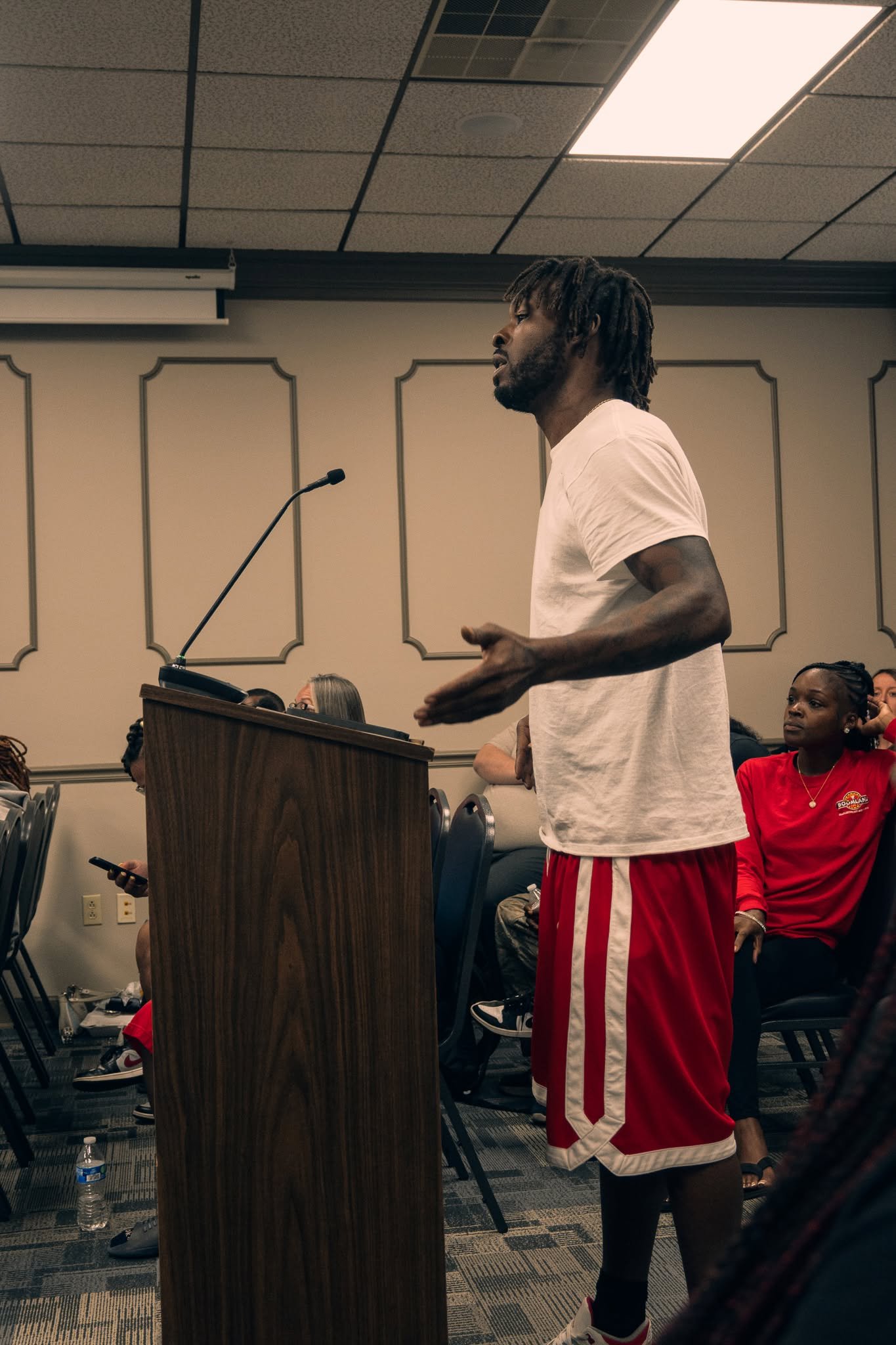
Andre Young, a family member of Lloyd Gilmore, also spoke. “Honestly, i’m looking at some people, if I saw you walking down the street, you wouldn’t even speak to me.”
“That’s not true—”
“You’re making a lot of assumptions—”
“Hey, I’m speaking my peace… I would like to know how each individual feel about this situation… because this is how we are going to start change, we all gotta feel it… We need to make sure that y’all know what we’re going through. Y’all don’t understand. Sikeston the hood, y’all don’t even worry about that down there, but you know what the hood is, because you didn’t correct me — where’s the hood? It’s separate, it’s not equal. My son is five years old. We outside playing, and every 5 or 10 minutes, there’s police riding around our neighborhood. We have to go to the white folks neighborhood to be comfortable… These things are traumatizing our kids, things that we see every single day… Black kids are scared of police, the white kids want to be like them.”
City Manager Jon Douglass responded, “the police respond where crime is happening… He wanted to know how I feel, I feel it’s a terrible tragedy. I feel for anyone who passes away, especially in an interaction with police.”
Andre Young responded, saying he wants to know what will be done moving forward for change.
Mayor Turnbow responded, “I tried my best, and us as a council, we brought one of our council meetings down to Lincoln University so that we could get more people involved. We do the video now so more people can get involved. We do everything that we can. Believe it or not, I like the room full. I try to attend every event, whether its Music in the Park or Stop the Violence or whatever, to show people we have to stop looking at each other with different eyes.”
This is when things began taking a lighter turn.
Mayor Turnbow asked, “when does Sikeston come together and we forget everything?”
Redd, and others, say, “the rodeo!”
“No—” Mayor Turnbow says. That wasn’t the answer he was looking for. “Wrong Redd!”
The room laughs for a moment.
“When Sikeston basketball plays, how many of us sit on one side and say, We are Sikeston — Why can’t we carry that over into the community? We don’t care what color you are, what car you drive, what you’re wearing, anything else, we’re all there supporting the sports of Sikeston. If we could take that mentality and bring it on to the rest of the community, we could be a hell of a lot better place.”
“That’s good,”
“I like to hear that coming from you.”
“And I challenge you, if you see me, if I don’t say hi to you, say hi to me—”
“Hi Greg!” Redd says.
“Hi Redd!” Turnbow says.
Turnbow says, he believes we are better than this. A lady in the crowd responds, “but clearly we’re not. This isn’t about black and white this is about the police.” She was invited to the podium, but did not speak, simply wrote her name and left.
Later on, Chief McMillen spoke about his ongoing efforts to address some of the public’s concerns. He says when he took the job of Police Chief, he took it seriously.
“In 2020, we partnered with the DOJ (Department of Justice) and we did the SPC Program, we started the PAC committee. We tried to get people to come, we tried to partner with the community, but people stopped coming.” He says that he also started attending NAACP meetings, but folks would ask questions like, “why is the Chief here? Why is he spying on us?” He says he stopped going, so that nobody would avoid the NAACP meetings.
Chief McMillen also touched on police presence.“Right now, in a room at DPS, I have a map of the murders in this town. I have been there when small kids have been shot and killed. A 19-year-old had his chest blown open with a shotgun, and it’s terrible. You asked me to speak, you put a lot of criticism on my department, and I’m telling you, this is what motivates us. Now all that effort, how many people come and help us? If people would call us and tell us when things are heating up, then we wouldn’t have to be present all the time. You ask what we are going to do, but for the last 6 or 7 years, we have tried.”
Soon after, I took to the podium, because I had questions of my own. “How much is being done outside of policing to prevent crime or to heal these communities that are historically disadvantaged? Is there any active thought being put into changing those things?”
Mayor Turnbow said, “right now, there probably isn’t as much, but it’s not that we haven’t tried. In the past, there’s not been much participation… We can try again.”
I had another question. “When the results of the Missouri State Highway Patrol’s investigation come out, would the city commit to a meeting to discuss those findings and how people might want to move forward?”
Mayor Turnbow said, “I’ve never been involved in that, I don’t know how that happens, I don’t know,”
“Maybe a public discussion over what the findings say and why they say that could help people to understand the processes going on behind the scenes when an investigation like this is done?” I ask.
“We could look into that, yes.” Mayor Turnbow responded.
I also wanted to know how much they understand about the community’s needs, and what leaders need from the community to understand their needs better. Mayor Turnbow said, “until we get together and discuss those concerns, I’ll never know.”
“So your answer to that is we need more people in here speaking in person?”
“We need more people not only in here but in other meetings outside of here. We don’t need to come to a city council meeting and say this is it.”
A crowd member asked, “do you publish those meetings?”
“No, i’m saying we need to create more meetings.”
After I spoke, a lady came up to express her own unique concern about the fireworks in city limits, the damage they can do to property, and how they can harm the health of pets. She says, the remnants of fireworks hit her porch, and she has straw bedding on the porch for rescue animals. She was worried how easily a fire could have been started.
Another man spoke after her. “The way this meeting was held, I want our community to pay attention to how we conducted this meeting, cause this is how you conduct a meeting… As for the council… Trust is easily lost but not easily gained.”
A few more folks spoke after that, but it was clear the meeting was starting to settle. It ended with Mayor Turnbow saying, “a lot of things need to stop, but a lot of things need to start,” and a couple minutes later, Redd seemed to help with the adjourning.
“Are there any more questions?”
“Just kick us out already Greg!” Redd stands up to leave, and the room seems to start to follow.
“Hey Redd — see you soon.”
A point expressed by the public, and public officials, was the need for more community involvement. Public officials feel like they can only initiate so much. One major thing I’m seeing is — a severe sense of disconnection between the public, officials, and the procedures that officials have to undergo.
A potential way to mend that disconnection is through in person connection. You can do that by attending events.
Stop the Violence is next Saturday, July 11th, from 1-4pm, at American Legion Park (across from the Sikeston BMU).
There’s a Community Resource Fair Day at Lincoln Park on July 14th from 10am-2pm focused on preventing firearm suicide and violence.
Finally, the City Council meets every first and last Monday of the month.
Leave a Reply